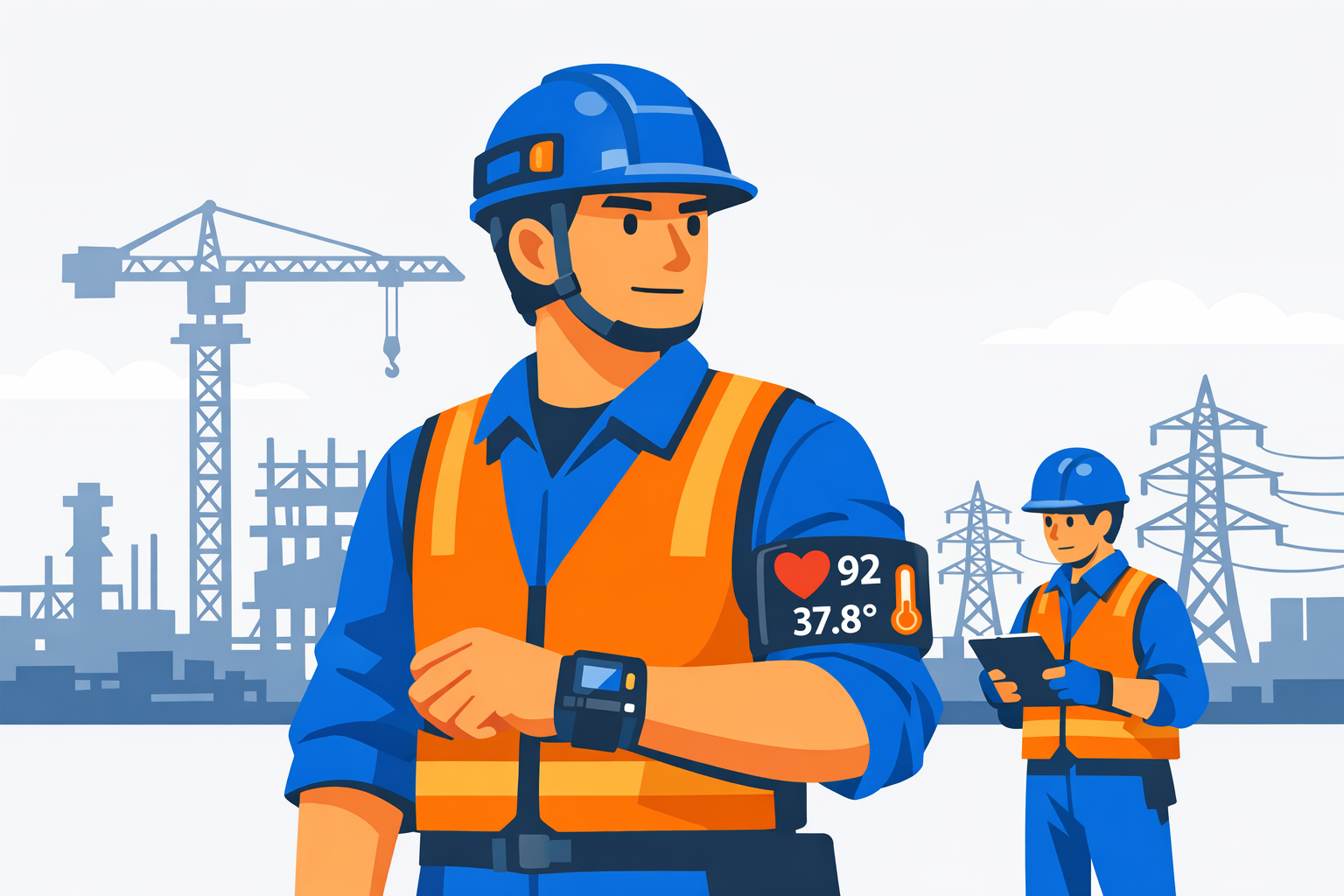
Biowearable sensors are transitioning from experimental pilots to essential tools for managing heat risk on construction and energy sites. As regulatory heat-safety standards become stricter and heatwaves intensify, these devices are transforming how project teams monitor core temperature, heart rate, hydration, and exposure, enabling timely intervention before incidents occur.
The Growing Heat Risk in Construction and Energy
Construction and energy projects are highly exposed to extreme heat due to strenuous outdoor work, heavy personal protective equipment (PPE), and confined environments.
Construction workers account for roughly 7% of the U.S. workforce but more than one-third of occupational heat-related deaths. Between 2011 and 2020, about one in three workplace deaths involving exposure to extreme heat occurred in construction and extraction occupations. These statistics establish heat as a central safety issue in construction, not merely a weather concern.
Climate trends and regulatory actions reinforce this shift. Spain's Royal Decree-Law 4/2023 obliges employers to adapt or halt outdoor work during extreme heat alerts when protection cannot be otherwise ensured. In the U.S., a proposed federal heat injury and illness prevention rule aims to protect an estimated 36 million indoor and outdoor workers from extreme heat exposure.
Contractors and energy operators now focus on heat stress prevention, core temperature monitoring, and structured safety programs that go beyond water-rest-shade campaigns.
How Biowearable Heat-Safety Systems Work
Biowearable systems integrate physiological sensors, environmental monitors, communications, and analytics to deliver near real-time insight into individual workers' heat strain and exposure.
Physiological Monitoring: Core Temperature, Heart Rate, Hydration
Traditional core temperature monitoring relied on invasive methods unsuited to routine site use. Modern biowearables use heat-flux sensing, heart-rate-based algorithms, and skin thermometry to continuously estimate core body temperature.
Key physiological variables typically monitored include:
- Core body temperature (measured or estimated)
- Heart rate and variability
- Sweat rate or indirect hydration markers
- Activity levels or exertion indices
Occupational exposure guidelines stress the importance of controlling core temperature. The ACGIH heat-stress threshold recommends maintaining core temperature below 38.5 °C for acclimatized workers and 38.0 °C for non-acclimatized workers during hot work. Risks increase markedly above 40 °C.
Biowearables translate these thresholds into personalized warnings. If a worker's core temperature or heart-rate profile exceeds safe levels, the device triggers on-body alarms and notifies supervisors.
Examples in use include:
- Armband or chest-strap devices estimating core temperature and exertion via heat flux and heart rate
- Smart patches tracking sweat rate and electrolyte loss to flag dehydration risk
- Helmets and vests with integrated body temperature and heart-rate sensors for construction workers
Environmental and Location-Aware Sensing
Heat strain depends on both internal physiology and external factors. Many setups pair biowearables with environmental sensors that measure:
- Wet Bulb Globe Temperature (WBGT) or other composite indices
- Ambient temperature and humidity
- Solar radiation or load
- Air movement and, in some cases, radiant heat from equipment
Some systems use location data (Bluetooth, ultra-wideband, GPS) to map exposure hotspots, such as reflective rooftops or poorly ventilated rooms.
Analytics, Alerts, and Integration with Safety Systems
Data from wearables and fixed sensors is aggregated into cloud or on-premises platforms for:
- Real-time safety dashboards
- Automated alerts (SMS, apps, device sirens)
- Heat-stress scoring for individuals and crews
- Trend analysis of work-rest cycles, acclimatization, and seasonal patterns
Recent research shows that standard heart-rate wearables can estimate core temperature using machine-learning models trained on field data. While promising, validation under real site conditions is ongoing.
Comparing Approaches to Heat Monitoring
| Approach | What it Measures | Worker Specificity | Typical Use Cases | Key Limitations |
|---|---|---|---|---|
| Environmental indices only (WBGT, HI) | Ambient/radiant heat, humidity, wind | Low-applies to all in area | Site-wide heat alerts, work-rest schedules | No individual physiology insight |
| Manual physiological checks | Spot heart rate, symptoms, occasional temperature | Medium-depends on checks | Toolbox talks, medical checks, incident response | Infrequent and subjective |
| Biowearable multi-sensor systems | Core temp, HR, activity, hydration, local environment | High-continuous profiles | High-risk tasks/sites, heavy PPE, confined spaces | Device management, cost, data/privacy |
Comprehensive programs combine these layers: site-wide environmental monitoring, structured work-rest controls, and targeted biowearables for high-risk scenarios.
Evidence of Impact: Early Results from Sites
Construction Pilots
Early pilots indicate that biowearables can improve situational awareness and intervention timing, though extensive peer-reviewed data remains limited.
Examples:
- A Texas general contractor equipped workers with upper-arm heat-stress sensors providing real-time alerts
- Major U.S. builders piloted armband sensors on solar and industrial sites, integrating data into daily safety planning
- A Saudi contractor used smartwatches and AI video analytics to monitor heat indicators and adjust break schedules
Case studies report:
- Earlier removal of workers before symptoms escalate
- Objective data to justify shade, schedule, or crew rotation adjustments
- Greater worker confidence due to data-driven decisions
Most evidence to date is qualitative; few studies publicly quantify incident reductions solely from wearables. This reflects the technology's relative newness and challenges in isolating its impact.
Energy and Industrial Operations
The energy sector-especially refineries, petrochemical plants, and aluminum smelters-has adopted biowearables for heat-strain monitoring due to high heat loads and strict HSE standards.
Reported initiatives include:
- A Gulf region aluminum producer trialing wearables for potline workers during peak summer
- An offshore operator deploying hydration patches to crew in hot, confined spaces
- Contractors in Saudi Arabia and the region testing heat-stress bracelets for desert site workers
These pilots often align with ISO 45001-certified safety systems, using wearable data for real-time alerts and refining preventive measures.
Market Signals: From Niche Tools to Mainstream Safety Technology
Industrial wearables are driving the adoption of biowearable heat-safety solutions.
The industrial wearable market is estimated at USD 15.27 billion in 2024, with common devices measuring heart rate, temperature, and environmental conditions. The construction wearable technology market is forecast to grow from USD 4.6 billion in 2025 to USD 7.55 billion by 2030, at a compound annual growth rate of 10.7%.
Adoption is increasing. A U.S. Chamber of Commerce-cited estimate from 2021 suggested up to 23% of construction firms use some form of wearable technology. Devices range from proximity alarms and fall detection to biometric sensors supporting heat safety.
Worker attitudes are generally favorable, with caveats. A cross-sector survey found 71% of workers open to using wearables, while 58% expressed privacy and data quality concerns. Acceptance rises when data use is transparent and limited to safety.
Implementation Barriers on Real Projects
Despite growing interest, substantial hurdles must be cleared before biowearable heat monitoring becomes standard practice.
Technical and Operational Constraints
Key challenges:
- Accuracy and Validation: Algorithms must be tested in site-like conditions-high humidity, heavy PPE, diverse skin tones
- Battery Life and Robustness: Devices need to last through shifts, resist dust, moisture, and impacts
- Connectivity: Remote or complex sites may disrupt Bluetooth, Wi-Fi, or cellular links
- System Integration: Merging wearable data with incident reporting and scheduling demands IT coordination
Workforce Acceptance and Training
Worker trust is critical, requiring:
- Clear communication that data is for safety, not performance monitoring
- Consultation with worker representatives or unions
- Supervisor training to interpret alerts and combine data with field judgment
- Attention to comfort, PPE compatibility, hygiene, and cultural acceptance of body-worn tech
Program Design and Governance
Effectiveness improves when biowearables are integrated into structured heat-safety programs, rather than used as stand-alone devices. Programs typically feature:
- Written heat injury and illness prevention plan (HIIPP)
- Defined alert thresholds and actions (rest, cooling, medical review)
- Data retention, access, and anonymization protocols
- Evaluation metrics, such as incident trends and worker feedback
Without such frameworks, organizations risk either insufficient response or overwhelming teams with unfiltered data.
Data Protection, Privacy, and Ethical Use
In Europe and similar jurisdictions, biowearable systems must comply with strict data protection rules.
Physiological data, including heart rate and core temperature, is treated as special-category personal data under GDPR, requiring enhanced safeguards:
- Identify lawful processing bases (e.g., occupational health obligations)
- Apply data minimization-collect only what is essential
- Inform workers about data collection, use, access, and cross-border transfer
Excessive monitoring can create psychosocial risks, such as stress and loss of autonomy. Authorities recommend:
- Involving worker representatives in system design
- Conducting data protection impact assessments
- Using analytics to guide organizational improvements, not shift responsibility onto individuals
Global contractors must coordinate these demands across jurisdictions, referencing OSHA and national data laws as needed.
Looking Ahead: From Niche Pilots to Standard Practice
Three trends support the continued growth of biowearable heat monitoring:
- Regulatory convergence: More regions are mandating objective heat-safety measures and documentation
- Sensor and algorithm advances: Improved methods allow core temperature estimation from widely available sensors
- Integration with digital safety systems: Biowearables are increasingly part of multi-layered safety architectures alongside smart helmets, AI analytics, and digital permits-to-work
Industry guidance emphasizes that wearables supplement but do not replace engineering and administrative controls-such as shade, ventilation, and workload management.
Actionable Next Steps for Construction and Energy Leaders
To implement or expand biowearable heat-safety programs, organizations can:
- Map heat risk and prioritize use cases: Focus on high-risk tasks or environments
- Pilot before scaling: Launch targeted projects with defined metrics and feedback
- Select technology by site conditions: Factor in hazards, PPE, exposure to water, and network reliability
- Integrate with formal heat-safety plans: Align alerts with established procedures
- Address privacy and ethics upfront: Engage legal, data protection, and workforce representatives
- Train and support supervisors: Ensure field teams can interpret data and act appropriately
Embedding biowearable monitoring in digital prevention strategies supports compliance, safety, and productivity in an era of rising temperatures and regulatory expectations.
Frequently Asked Questions
How do biowearable sensors differ from standard heat index monitoring?
Standard heat index and WBGT measurements reflect environmental conditions, guiding site-wide controls but missing individual differences in exertion or health status. Biowearable sensors add personalized physiological data-such as core temperature and heart rate-offering a more comprehensive risk profile.
Are biowearables required by current regulations?
Most current regulations focus on risk assessment, environmental monitoring, acclimatization, and control measures-not mandating biowearables. However, as regulations prioritize evidence-based risk management, organizations are using biowearables to strengthen safety and decision-making, especially in high-risk or extreme climates.
What metrics should be monitored for effective heat stress prevention?
Effective programs combine:
- Physiological: Core temperature, heart rate, sweat rate or hydration proxies
- Environmental: WBGT, ambient temperature and humidity, solar load, wind speed
- Exposure: Duration of hot work, time since last rest, acclimatization status
Systems integrating core temperature estimates, heart rate, and local environmental data yield actionable insights.
How can organizations manage worker privacy when using biowearables?
Best practices include:
- Limiting data collection to safety-relevant variables
- Pseudonymizing or aggregating data for analysis; restricting personal data to medical/safety staff
- Clear policies on data use, access, and retention
- Early data protection assessments and workforce involvement
These steps balance safety needs with legal and ethical data management.
Are biowearables cost-effective for small and mid-size contractors?
Cost-effectiveness varies by project, climate, and risk. Simpler environmental monitoring and structured breaks may suffice for smaller contractors in moderate climates. On high-risk or large-scale sites, potential reductions in incidents and lost workdays can justify investment in biowearables. Piloting on the most critical sites can help assess value before wider rollout.