South Korea's Hyundai Elevator has completed the world's first commercial installation of a modular elevator system in a residential high-rise, marking a significant departure from conventional shaft-based methods. The company announced on April 19, 2026, that it had successfully completed on-site verification and quality control testing for its modular elevator system - branded ENOBLOC - at the Hillstate Center Park apartment complex in Songdo, Incheon. The installation covers a 27-story residential building, making it the first commercial use of a modular elevator in a high-rise apartment above 20 floors.
Background
Elevator installation in high-rise construction has historically been a shaft-dependent, labor-intensive process carried out sequentially as a building rises - a method associated with extended schedules, high-altitude hazards, and inconsistent quality. Traditional elevator installation can take up to approximately 190 days due to the complexity and labor intensity of assembling major components on site, according to data cited by the companies involved. While modular construction techniques have increasingly been applied to structural building elements, extending the approach to precision mechanical systems such as elevators in buildings above 20 stories has remained largely unexplored. ENOBLOC now brings the modular method into this domain. The development aligns with tightening safety regulations in South Korea, where stricter enforcement of high-risk site activity policies is pushing contractors to reassess shaft-dependent trades.
System Details
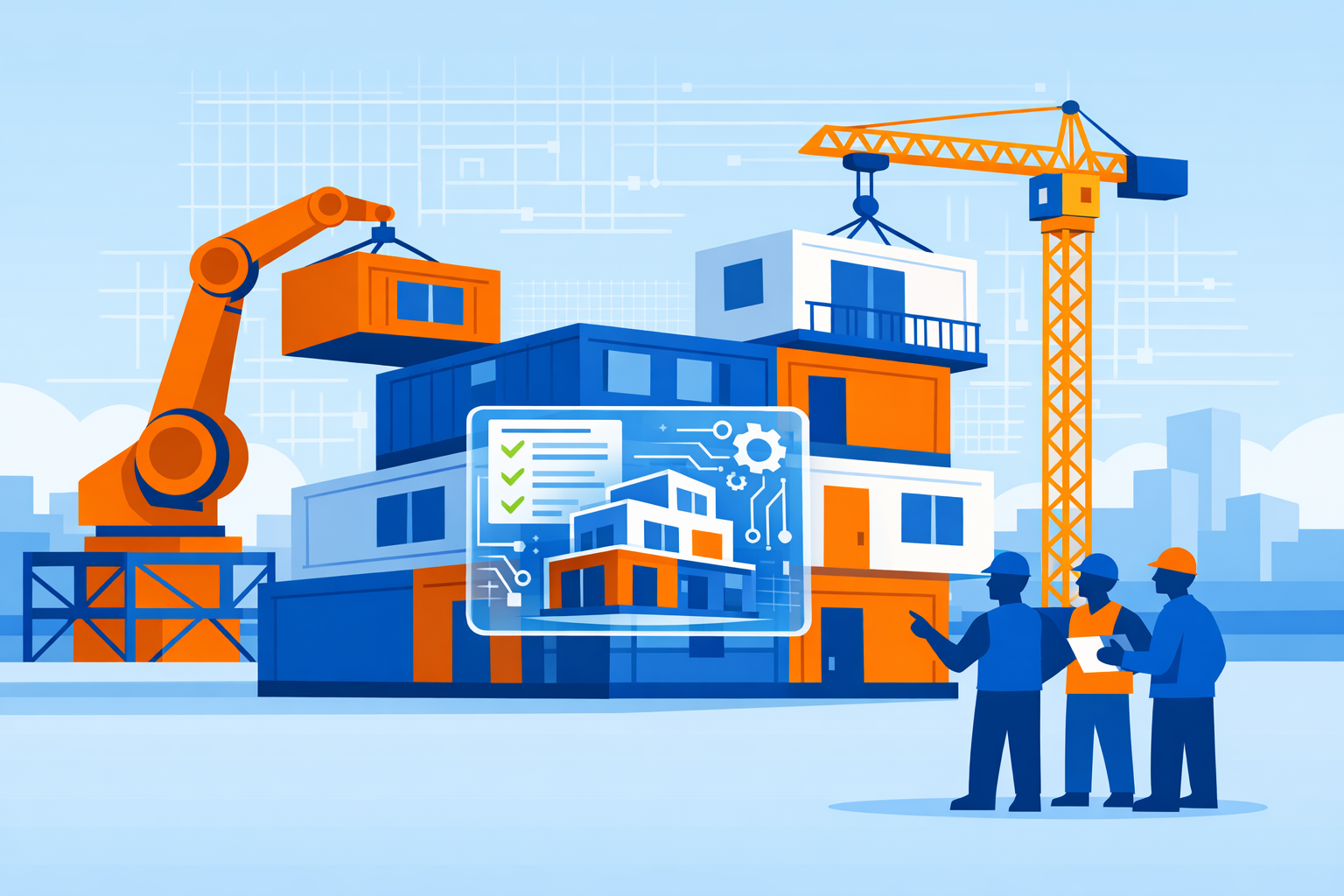
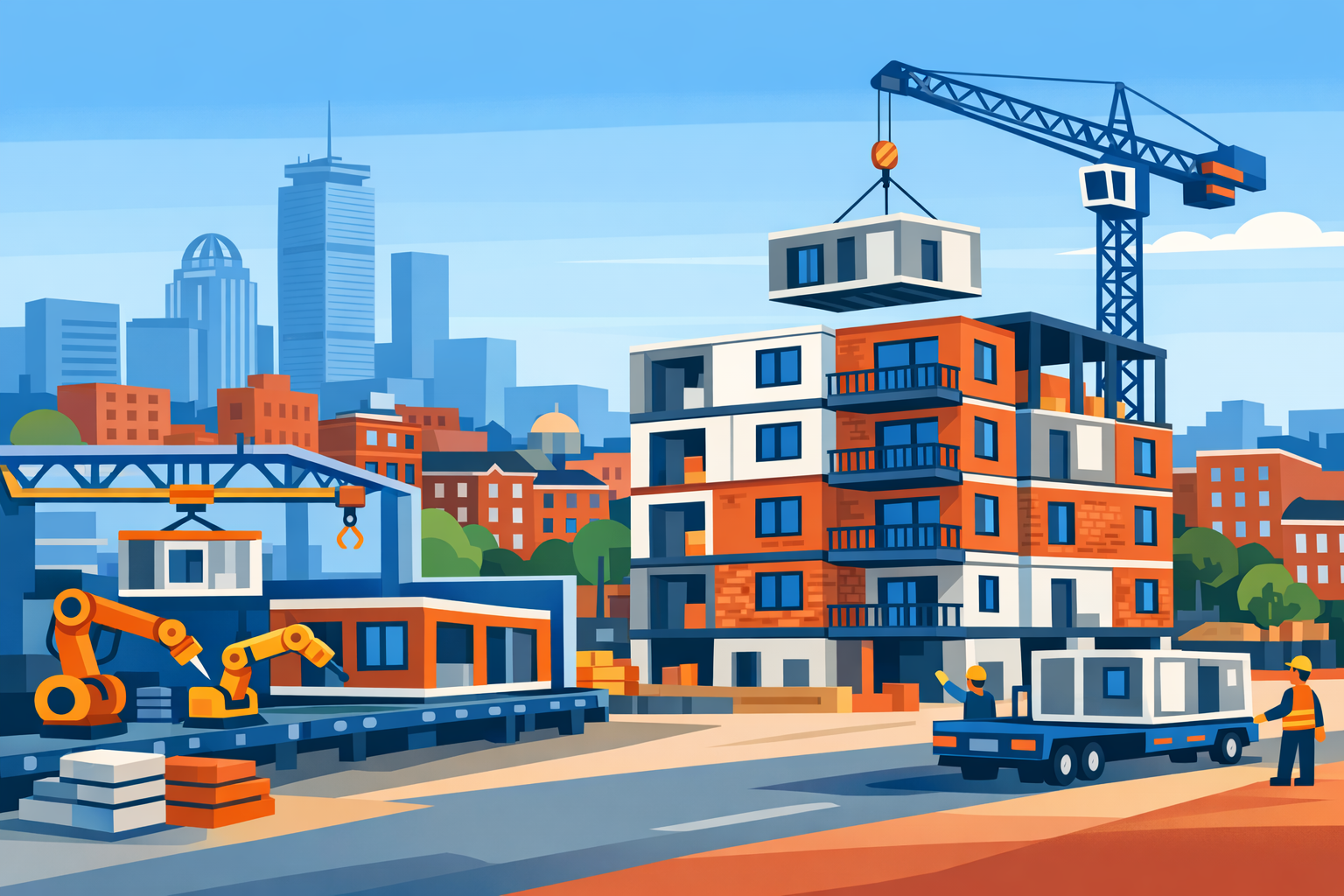
ENOBLOC pre-manufactures more than 90 percent of an elevator's key components as modular units in a factory setting, transporting them to the site for final assembly and fastening, according to Hyundai Elevator. To address the logistical challenge of delivering and assembling large modules on constrained urban sites, the company developed what it calls a "mobile assembly shop." The on-site facility occupies less than 33 square meters and functions as a temporary staging and preparation area where modules are completed before being lifted into position.
According to Hyundai Elevator, ENOBLOC reduces elevator installation time by up to 80 percent compared to conventional methods. At the Songdo Hillstate Center Park site, partial application of the system cut the construction period by approximately 40 days, with full-scale deployment projected to shorten schedules by more than two months. Shifting assembly work out of the elevator shaft also significantly reduces high-altitude labor exposure, a primary source of serious accidents in the trade.
CEO Cho Jae-cheon stated that ENOBLOC is "a solution that will change the paradigm of construction and development by reducing high risks, inefficiencies, and environmental burdens," adding that the company intends to position the technology as a recognized global standard.
On the intellectual property front, Hyundai Elevator has filed or applied for approximately 50 patents covering modular structures, high-rise application technology, hoistway integration, and mass-production methods, with filings targeting the United States and Middle Eastern markets in addition to South Korea. The company also plans to file around 20 additional patents covering the mobile assembly shop system and module replacement and on-site assembly technology.
The commercialization builds on a broader industry partnership: on April 9, 2026, Hyundai Elevator and GS Construction signed a memorandum of understanding to jointly develop modular elevator technology for both reinforced concrete and steel modular apartment buildings, with a pilot planned at GS Construction's Siheung Geomo A-1 Block project.
Outlook
Hyundai Elevator has signaled intent to pursue overseas commercialization, with the U.S. and Middle East identified as primary target markets for both patent filings and technology deployment. The GS Construction pilot at Siheung Geomo will serve as the next key proving ground, testing the system across a mixed-method development that includes what would be South Korea's tallest steel modular apartment building. Broader adoption could reshape procurement timelines, labor requirements, and on-site safety planning for elevator installation in urban high-rise projects globally.