New York's fossil-fuel ban in new low-rise construction nears enforcement as court stay expires 28 October
New York's All-Electric Buildings Act ban on fossil-fuel systems in new low-rise construction is set to take effect 28 October 2026, after the Second Circuit upheld the law on 30 June.
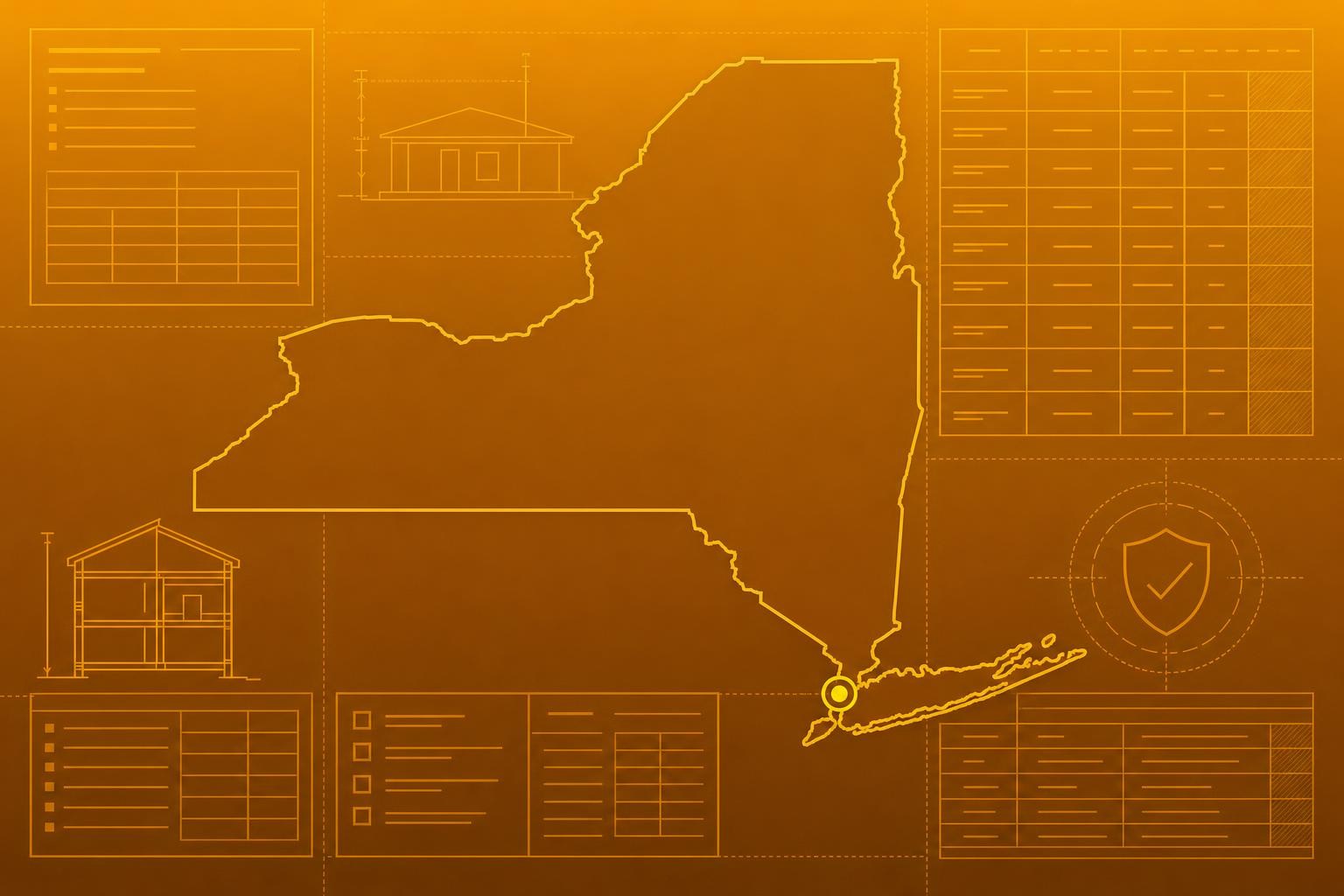
New York State's prohibition on fossil-fuel heating and appliance systems in most new low-rise buildings is set to become enforceable on 28 October 2026, unless the plaintiffs challenging the law secure a further stay from the U.S. Supreme Court. The rule, embedded in the 2025 New York State Uniform Fire Prevention and Building Code (19 NYCRR Subpart 1229-2) and the State Energy Conservation Construction Code (19 NYCRR Section 1240.6), binds general contractors, HVAC contractors, plumbers, and pipefitters working on new construction across the state.
Background: the 2025 Uniform Code and the suspended provisions
New York's State Fire Prevention and Building Code Council adopted the 2025 Uniform Code on 25 July 2025; the rules took effect 31 December 2025, replacing the 2020 edition. The 2025 code is based on the 2024 International Building Code with New York-specific amendments under 19 NYCRR Parts 1219 to 1229. Applications submitted before 31 December 2025 remain subject to the 2020 edition; all permit applications filed on or after that date must comply with the 2025 code.
The fossil-fuel provisions were never enforced from the start. The New York State Department of State confirmed that the provisions prohibiting fossil-fuel equipment in new buildings - found at 19 NYCRR Section 1240.6 and Subpart 1229-2 - were suspended by court order and are "neither effective nor enforceable." That suspension was agreed by stipulation on 12 November 2025, when the state and the plaintiffs filed an agreement pausing the effective date pending the outcome of a Second Circuit appeal.
What the Second Circuit ruled
On 30 June 2026, the U.S. Court of Appeals for the Second Circuit upheld New York's All-Electric Buildings Act, ruling that the law is not preempted by the federal Energy Policy and Conservation Act (EPCA). The three-judge panel held that EPCA's preemption clause governs federal energy-conservation standards for specific appliances, not state rules that operate at the building level. The court also affirmed New York City's parallel Local Law 154.
The decision creates a circuit split: the Ninth Circuit previously held that Berkeley, California's building electrification ordinance was preempted by EPCA. That split makes a petition to the U.S. Supreme Court plausible.
What the law requires and who it affects
The All-Electric Buildings Act, enacted as part of the 2023 New York State Budget, phases out fossil-fuel combustion systems in new construction in two stages:
- Phase 1 - Buildings of seven stories or fewer: new construction permitted after the effective date must not install natural gas, propane, heating oil, or other fossil-fuel equipment or building systems. Exemptions apply to hospitals, farms, manufacturing facilities, restaurants, and commercial or industrial buildings exceeding 100,000 square feet of conditioned floor area.
- Phase 2 - All new buildings of any height: the prohibition expands to cover all new construction permitted after 31 December 2028.
Trades directly affected include general contractors, HVAC and mechanical contractors, plumbers, and pipefitters. New York City is exempt from the state Uniform Code and enforces its own NYC Construction Codes separately.
What to watch
Under the November 2025 stipulation, the stay lifts 120 days after the Second Circuit's ruling - placing the current expiry at 28 October 2026 - unless the plaintiffs petition the Supreme Court, in which case the suspension continues until 120 days after the Supreme Court denies review or issues its decision. Plaintiffs' counsel stated in July 2026 that a SCOTUS appeal was under consideration. Whether the stay remains in place beyond 28 October depends on whether a petition is filed and whether the Court grants an emergency application to extend the hold. Contractors and developers permitting new low-rise buildings in New York State should monitor the docket and confirm the status of 19 NYCRR Section 1240.6 and Subpart 1229-2 with the authority having jurisdiction before finalising mechanical system specifications.
Written by Construction Trade News's automated desk from the sources above and reviewed before publication. How we work.
Related
 Equipment
Caterpillar enters the compact utility loader market with the TUL100, adding four more compact machines at the same time
Caterpillar has launched five compact machines at once, headlined by the TUL100 - its first-ever compact utility loader - alongside the 253 CTL and three new mini excavators. North American sales begin in 2027.
13 Oct 2026 News
NewsFehmarnbelt excavation yields 300,000 sq m of new Danish coastline at Rødbyhavn
Sund & Bælt has opened the first 300,000 sq m of reclaimed land on Denmark's island of Lolland, built from seabed material dredged for the Fehmarnbelt Tunnel.
13 Oct 2026 News
NewsBain puts a $6 trillion revenue test on the US data center construction boom
Bain & Company says the global AI industry must generate $6 trillion in annual revenue by 2031 to justify a projected $5-$6.5 trillion data center buildout - and four constraints are already slowing US construction.
13 Oct 2026