Fehmarnbelt excavation yields 300,000 sq m of new Danish coastline at Rødbyhavn
Sund & Bælt has opened the first 300,000 sq m of reclaimed land on Denmark's island of Lolland, built from seabed material dredged for the Fehmarnbelt Tunnel.

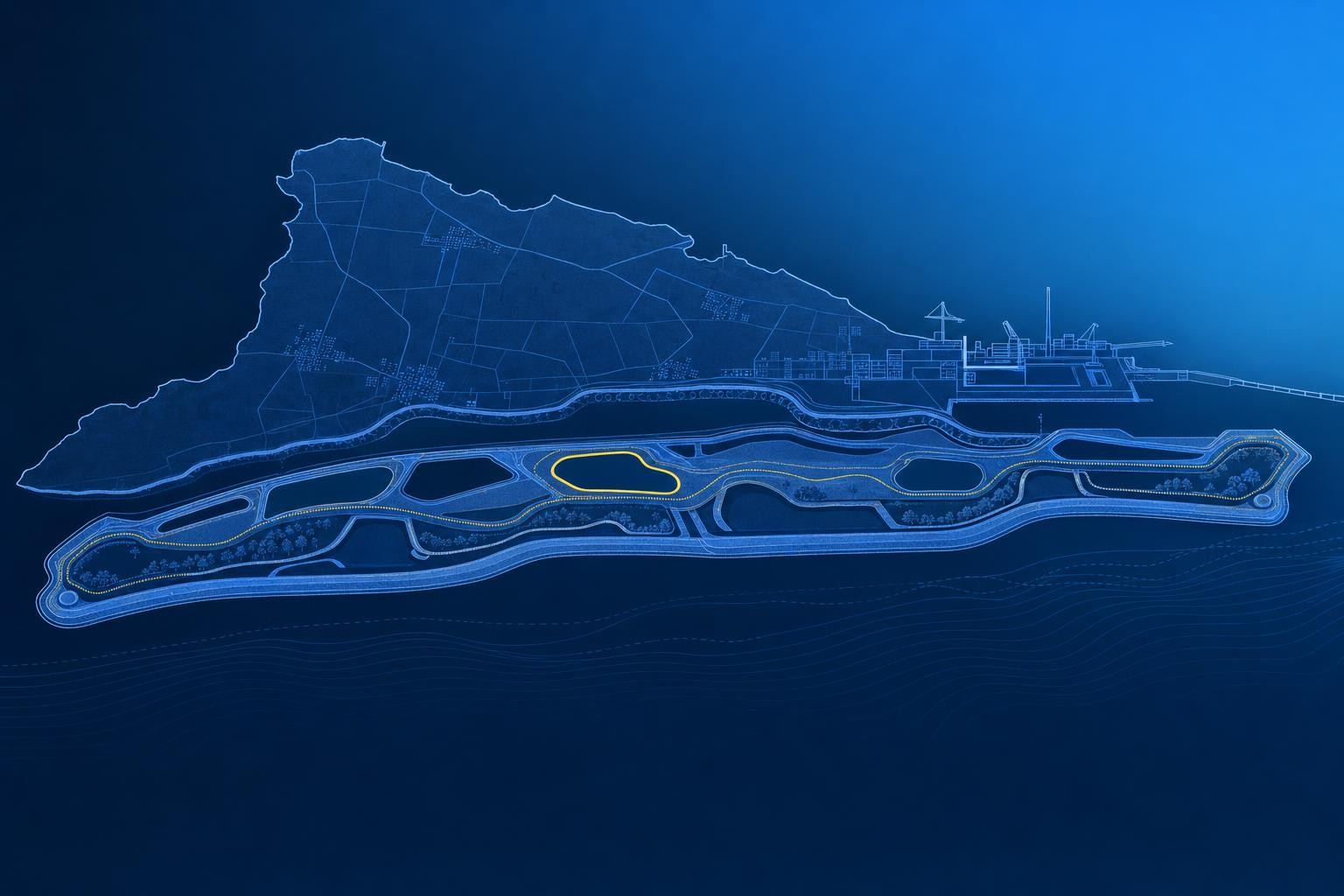
State-owned Sund & Bælt has opened the first section of a major land-reclamation programme on Denmark's island of Lolland, adding 300,000 sq m of new coastal territory to the country's southern shoreline[1]. The land sits east of the tunnel-element factory at Rødbyhavn and was formed entirely from seabed material excavated during construction of the Fehmarnbelt Tunnel - the €7.4bn fixed link between Denmark and Germany.
Material reused rather than disposed of
Dredging of the 18 km tunnel trench produced approximately 15 million cubic metres of soil, stone and sand, all of which is being redirected into land reclamation rather than treated as spoil. The 300,000 sq m area now open to the public is the first instalment of a programme that will ultimately create approximately seven kilometres of new coastline and around 300 hectares of nature and recreational space at Rødbyhavn.
Soil stripped from the tunnel-factory site before construction began - carrying seeds from the former landscape - has been spread across the reclaimed ground to accelerate natural revegetation[1]. The area includes three ponds designed to support amphibians, birds and insects.
Ditte Hjort, project manager for nature initiatives at Sund & Bælt, described the intent: "We have reused material from the seabed to create an area where people can experience distinctive coastal nature, with walking trails, ponds and wildlife including birds, amphibians and insects."[1]
Scale of the reclamation in context
The 300,000 sq m now open represents roughly 42 football pitches and is the first of several sections to be released to the public as construction progresses. Key figures for the wider programme:
- ~15 million m³ of dredged material redirected from the tunnel trench to the reclamation site
- ~300 hectares of nature and recreational land planned in total along the Lolland coast
- Seven kilometres of coastline shifted approximately 500 m further into the Baltic Sea, with new stone embankments creating additional marine habitat
Tunnel progress and schedule
By the end of September 2026, four tunnel elements had been immersed and connected, placing the first approximately 900 m of the tunnel on the seabed. Each of the 89 precast concrete elements measures 217 m in length and weighs 73,500 tonnes. The tunnel will carry two road tubes, two rail tubes and a service tunnel across the 18 km strait.
The project is running at least two years behind its original 2029 target, largely because of delays to the specialist immersion vessel IVY. Femern A/S, the project subsidiary, has confirmed a phased opening: road tunnels first, rail tunnels later once German hinterland connections - themselves delayed to at least 2032 - are ready. When fully operational, the link is expected to cut Hamburg-Copenhagen rail journey times from around four and a half hours to approximately two and a half hours.
The pace of element immersion through the remainder of 2026 and into 2027 will determine whether any of the lost schedule can be recovered, and Sund & Bælt has said it will publish a revised overall timeline once the immersion programme is more firmly established.
Written by Construction Trade News's automated desk from the sources above and reviewed before publication. How we work.
Related
 Equipment
Caterpillar enters the compact utility loader market with the TUL100, adding four more compact machines at the same time
Caterpillar has launched five compact machines at once, headlined by the TUL100 - its first-ever compact utility loader - alongside the 253 CTL and three new mini excavators. North American sales begin in 2027.
13 Oct 2026 News
NewsBain puts a $6 trillion revenue test on the US data center construction boom
Bain & Company says the global AI industry must generate $6 trillion in annual revenue by 2031 to justify a projected $5-$6.5 trillion data center buildout - and four constraints are already slowing US construction.
13 Oct 2026 News
NewsLucas Museum of Narrative Art opens in Los Angeles after eight years of construction and a $1bn build cost
The 300,000 sq ft Lucas Museum of Narrative Art opened in Los Angeles on 22 September 2026, delivered by Hathaway Dinwiddie after an eight-year build costing around $1bn.
13 Oct 2026