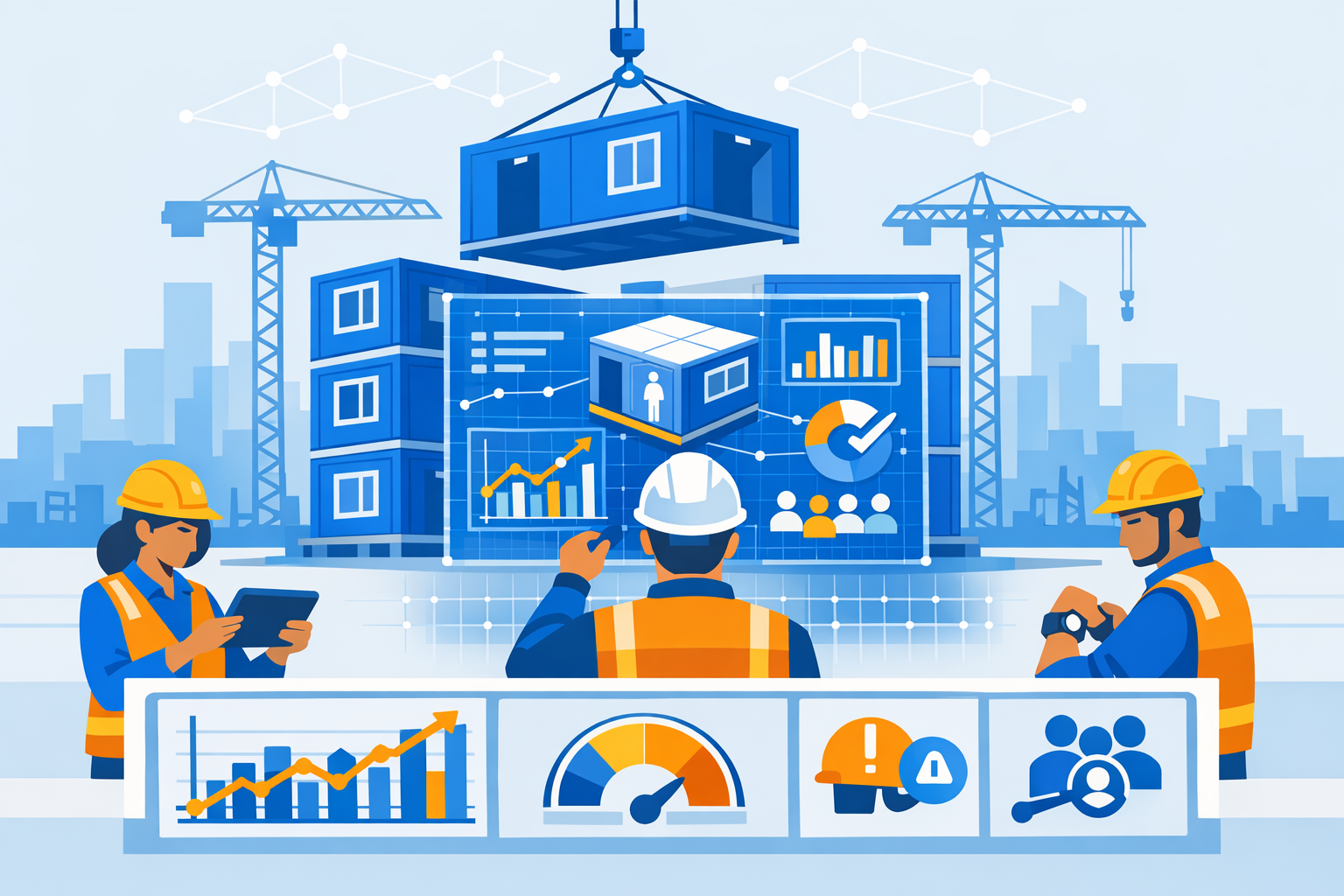
Modular construction sites are adopting real-time workforce intelligence platforms to counter labor shortages and compressed project timelines. These platforms provide insights into productivity, safety, and staffing, reshaping training, hiring strategies, and cross-project management.
Background
The U.S. construction sector faces a widening labor gap, with projections indicating a need for nearly 499,000 additional workers by 2026 to meet demand and replace retirements. Despite modest hiring growth, labor availability remains limited, leading to schedule delays, increased wages, and safety concerns. In response, firms are expanding modular construction, offsite prefabrication, and AI-based technologies to increase productivity with fewer workers. Modular methods reduce on-site labor needs and shift demand toward digitally skilled, shop-based workers.
Details
Construction firms are deploying workforce intelligence platforms that aggregate real-time data from jobsite tools, wearable sensors, and workforce management systems. These platforms offer analytics on labor utilization, safety incidents, and idle time. This approach aligns with AI-powered workforce management strategies, enabling predictive staffing and proactive deployment amid ongoing talent shortages. AI-driven planning and scheduling tools have reduced estimating time by 60-80%, while offsite MEP prefabrication has halved installation time. Digital twins and predictive frameworks have produced a 43% reduction in estimating labor and a 6% decrease in overtime in pilot projects. Wearable devices and analytics-driven monitoring enhance safety during modular lifts and highlight operational inefficiencies.
Workforce analytics help firms identify trends across projects, recognize high-performing crews, and target training efforts where productivity is low. Analytics platforms also support hiring decisions using real-time labor availability data and market benchmarks.
Outlook
With labor shortages ongoing, the use of workforce intelligence is expected to expand on modular sites. Platforms that integrate safety monitoring, productivity tracking, and predictive analytics will likely drive targeted training, hiring flexibility, and performance-based labor management in modular construction.