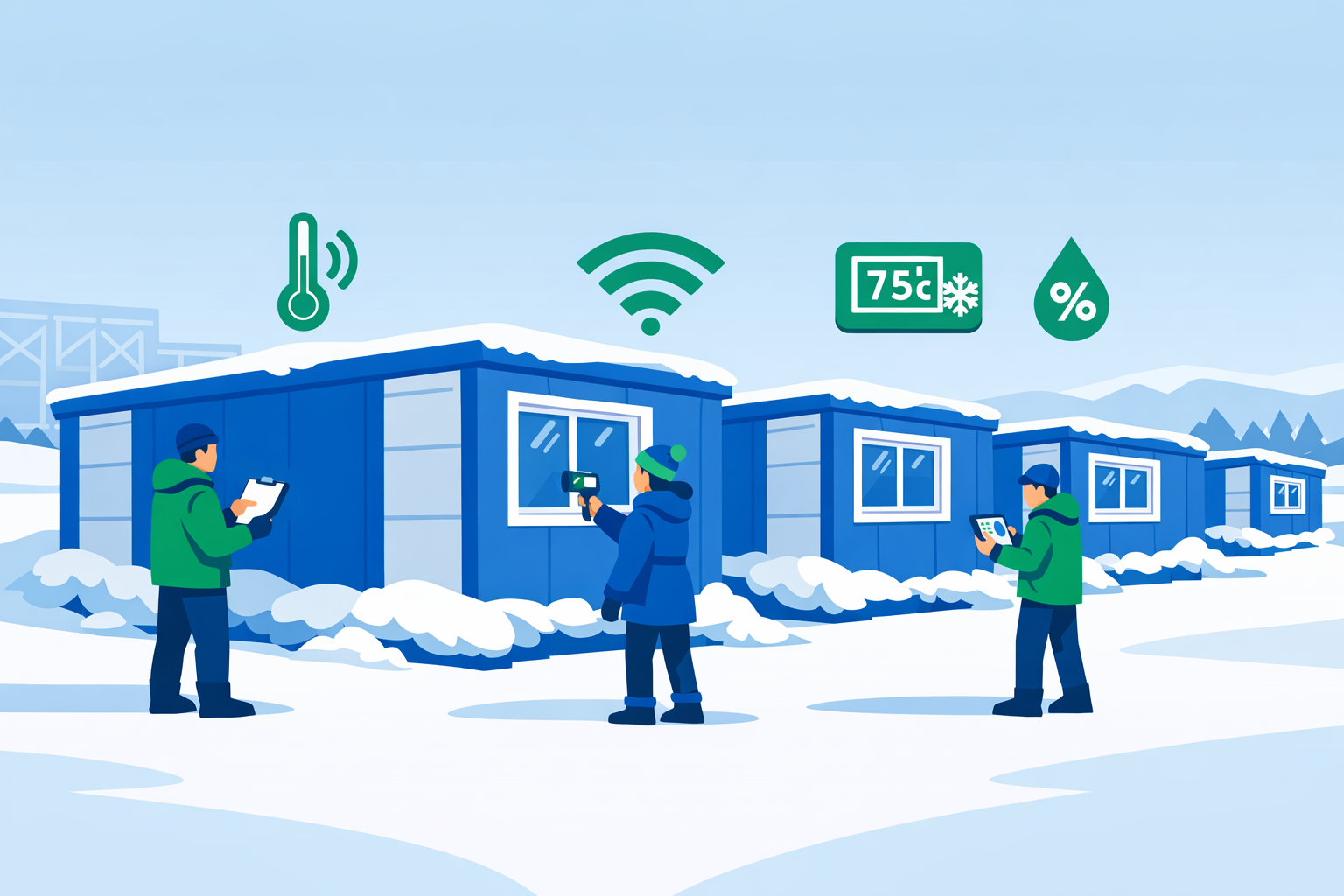
Modular disaster-relief housing is being adapted for winter resilience through enhanced inspections, energy-efficiency standards, and automation upgrades. In North America and Europe, authorities and providers have introduced seasonal readiness protocols, freeze-thaw durability measures, and stricter building envelope regulations to support rapid deployment and secure regulatory approval in cold climates.
Background
Disaster-relief housing has traditionally focused on speed and affordability. However, recent severe winters have revealed vulnerabilities in temporary shelters. Modular systems-factory-built units transported to site-must now meet both energy performance and structural durability requirements for approval in cold conditions. With climate extremes intensifying, many regions are updating codes to incorporate low-energy and cold-weather standards, especially for emergency-use facilities.
European building codes in cold climates enforce strict standards for insulation, airtightness, thermal bridging, and ventilation with heat recovery. Norway's Net Energy Demand regulations and Sweden's zone-based BBR rules mandate minimum thermal resistance and require performance monitoring after construction[1]. In China's severe cold regions, standards such as JGJ26-2018 provide both prescriptive and performance-based pathways, specifying envelope RSI requirements and energy-use benchmarks compared to reference buildings[2].
Details
Modular suppliers are deploying advanced building envelopes to boost winter performance. In Astana, Kazakhstan, one project utilized 150 mm rock wool and fiberglass insulation, triple-pane low-emissivity windows, thermally broken connectors, and heat-tape systems to manage snow loads, wind, and freeze-thaw cycles; three-year inspections verified performance at temperatures as low as -52 °C[3]. In Ukraine, Dorce's modular designs feature airtight construction, thermal-bridge control, and integrated HVAC systems tailored for energy efficiency and longevity in cold environments[4].
Seasonal inspection protocols now include winter-specific checklists for heating equipment, automation controls, and sensor-based diagnostics. While such frameworks are common in utility infrastructure, they are being adapted to modular housing to verify heating capacity, envelope integrity, and automation systems prior to winter occupancy, particularly for emergency deployment. These measures enable rapid occupancy while maintaining resilience.
Outlook
As modular disaster-relief programs expand, winter inspection requirements and performance standards are expected to become integral to permitting and certification procedures. Suppliers and regulators may increasingly mandate envelope testing, sensor-driven monitoring, and documented winter readiness as prerequisites for emergency-use approval and financing.
Integrating seasonal inspections and energy-efficient design into modular housing increases resilience in harsh winter conditions without slowing deployment timelines.