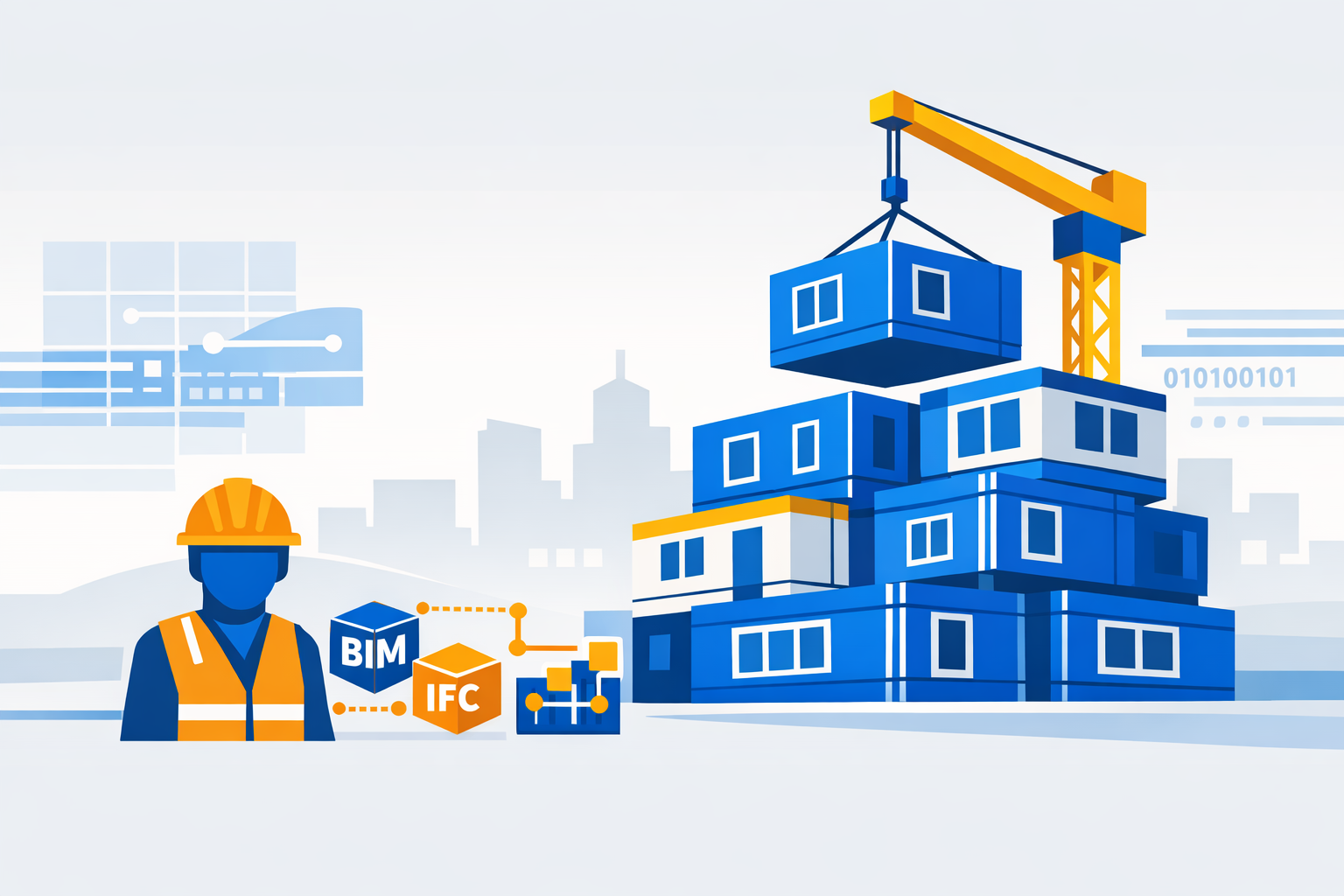
The U.S. construction industry must attract 439,000 additional workers in 2025 just to keep pace with demand - and that number climbs further in 2026. Against this backdrop, the federal government is accelerating a push to fundamentally redesign how public works are designed, procured, and built. The Advanced Building Construction (ABC) Initiative, led by the U.S. Department of Energy's Building Technologies Office[2], is expanding its state pilot programs to bring modular delivery methods and standardized digital workflows into mainstream public procurement - a shift with far-reaching implications for contractors, suppliers, local governments, and the broader construction workforce.
What the ABC Initiative Is - and Why It's Expanding Now
The ABC Initiative, led by DOE's Building Technologies Office (BTO), integrates energy-efficiency solutions into high-productivity U.S. construction practices for new buildings and retrofits. Its mission has always extended beyond energy savings: the initiative develops building technologies that can be deployed quickly with minimal onsite construction time, are affordable and market-ready, and coordinates key building-sector stakeholders to address related challenges - including workforce training, business models, demand growth, and service delivery.
The timing of the state-level expansion is deliberate. Global construction productivity advanced only 10% over 22 years - just one-fifth of the growth seen in other economic sectors, according to a 2025 McKinsey & Company report. That stagnation, combined with a worsening labor gap and rising project costs, has created political and operational pressure to accelerate adoption of industrialized construction methods in the public sector.
ABC combines advanced technologies and methods - such as offsite construction, design for manufacturing and assembly, packaged mechanical systems, robotics, and 3D printing - with low-carbon materials and high-efficiency systems. The expanded pilot framework applies these methods specifically to publicly funded infrastructure, where procurement structures have historically resisted rapid technology adoption.
Funding Architecture and Federal Commitment
The ABC Initiative has deployed successive rounds of competitive federal investment to build a foundation for this expansion:
| Funding Round | Award Amount | Projects / Teams | Primary Focus |
|---|---|---|---|
| Phase 1 (2019 FOA) | $26.3M | 40 projects / 29 organizations | Retrofit technologies & new construction methods |
| Phase 2 | $31.8M | 7 demonstration teams | Advanced retrofits in low-income communities |
| Phase 3 | $33.5M | Multiple awardees | Deep energy retrofit & new construction tech |
| ABC Collaborative (2020-present) | Ongoing | 400+ network companies | Standardization, modular/prefab, workforce |
In fall 2020, the U.S. Department of Energy launched the Advanced Building Construction Collaborative to help the United States remain globally competitive in high-performance prefabricated and modular approaches for building retrofits and new construction.
The Collaborative functions as connective tissue between federal R&D investment and state-level implementation. It brings together a broad array of building industry stakeholders to accelerate the development, demonstration, standardization, and mainstream adoption of innovative, high-performance construction technologies and processes.
State Pilots: How the Public Works Expansion Works
The state pilot expansion targets mid-scale public works - schools, transit facilities, government buildings, and community infrastructure - where modular delivery methods can demonstrate measurable results before scaling to larger programs.
Factory and offsite construction methods have the potential to produce higher-quality buildings on faster timelines, improve productivity, increase integration of energy-efficiency technologies, and provide workers with controlled working conditions at lower costs.
National laboratories are embedded throughout the pilot process. The National Laboratory of the Rockies, for instance, worked with modular manufacturer Model/Z and affordable housing fund SoLa Impact to identify the potential of industrialized construction in reducing costs, time, and waste.[1] Similar technical assistance relationships are being replicated in the public works pilots, with state transportation and public works departments receiving direct support in adapting modular procurement criteria.
Modular construction appeals to many developers because sitework and module fabrication can occur simultaneously, shortening schedules and reducing costs. For public agencies managing constrained budgets and political pressure to deliver on time, that schedule compression is a significant advantage.
Key Pilot States to Watch: Colorado has developed a program to attract modular manufacturers to the state, recognizing that transportation costs from outside its mountain geography created supply chain friction. New York's NYSERDA has invested in prefabricated retrofit R&D. Tennessee is home to Oak Ridge National Laboratory's 3D-printed modular panel demonstrations.
Procurement Reform: Reshaping How Public Bids Are Evaluated
The most consequential element of the ABC expansion for contractors and suppliers is not the technology itself - it is the procurement reform that accompanies it.
What is BIM? Building Information Modeling (BIM) is a digital, object-based information system that combines geometry, cost, schedule, and performance data into interoperable, federated models. In public infrastructure, BIM enables agencies to simulate alignments, detect design clashes, and optimize sequencing before tendering - replacing serial 2D document exchanges with concurrent, data-rich workflows.
Internationally, governments that have embedded BIM into public procurement have seen measurable results. Denmark mandated BIM for public procurements of new constructions and restorations as far back as 2007 and has enforced it on regional and local projects since 2011 for all projects above threshold values. Italy has required mandatory BIM use for public works exceeding €5.2 million since 2019. The U.S. has lagged these benchmarks, and the ABC pilots are designed in part to close that gap.
Under the emerging ABC procurement framework, bid evaluation is shifting to reward:
- Digital data continuity - IFC-compliant model submissions alongside traditional bid packages
- Demonstrated modular delivery capability - evidence of offsite fabrication experience and factory QA systems
- Interoperability compliance - digital workflows that enable cross-agency data sharing from design through asset management
- Workforce training investment - documented apprenticeship or upskilling commitments tied to the project
This comparison illustrates the structural difference between legacy and reformed procurement:
| Dimension | Traditional Public Works | ABC-Aligned Modular Procurement |
|---|---|---|
| Design Approach | Sequential design-bid-build | Integrated DfMA (Design for Manufacture & Assembly) |
| Data Standards | 2D drawings, fragmented documentation | BIM / IFC-compliant digital models |
| Delivery Timeline | Longer on-site cycles | 20-50% schedule reduction (offsite fabrication) |
| Change Order Risk | 10-25% of contract value | Reduced via spec-built, factory-controlled components |
| Interoperability | Jurisdiction-specific requirements | Standardized cross-agency digital workflows |
| Sustainability Reporting | Ad hoc | Integrated EPD / BIM carbon tracking |
The implications for general contractors are significant: firms that have not yet invested in BIM capability or modular subcontractor relationships may find themselves at a disadvantage as these criteria become embedded in federal and state bid solicitations. Readers tracking related digital compliance developments may also find value in earlier coverage of unified cyber standards proposed for modular construction workflows.
Workforce Pathways: Training as a Condition of Participation
The ABC pilots explicitly link workforce development to participation - a departure from traditional procurement, which treated training as an internal firm matter.
The Modular Building Institute recently agreed to partner with the Marshall Advanced Manufacturing Center (MAMC) to provide USDOL-approved apprenticeship programs for the modular industry. These credentialed pathways are designed to run alongside state pilot programs, creating a pipeline of workers trained specifically in offsite manufacturing techniques, digital workflow tools, and modular assembly.
The labor market context makes this urgent. According to the Associated General Contractors of America, the construction industry required 439,000 additional workers in 2025, with that number climbing to approximately 499,000 for 2026. The NCCER projects that approximately 41% of the current construction workforce will retire by 2031 - a mass exodus of skilled workers and institutional knowledge.
Prefabrication and modular systems can expedite projects, reducing schedules and overall costs. But productivity gains only materialize if the workforce is trained to execute in factory environments - a fundamentally different operational context from traditional site work.
Short-Term Milestones vs. Long-Range Payoff
For municipal procurement officers and state public works directors, near-term priorities are practical: adapting standard bid documents, training evaluation committees, and identifying pilot projects suited to modular delivery. The short-term implementation horizon is 12-24 months, with the first procurement reform integrations expected to appear in federal and state solicitations in 2026.
The longer-range returns are substantial. The global offsite construction market was valued at $172 billion in 2024 and is projected to reach $225.7 billion by 2030, growing at a CAGR of 4.6%. Builders using offsite methods routinely achieve 20-50% reductions in construction schedules, according to Dodge Construction Network's Prefabrication & Modular Construction SmartMarket Report.
Offsite construction produces significantly less material waste, energy consumption, and on-site emissions compared to traditional methods. Modular buildings are also designed for disassembly and reuse, supporting circular economy principles. For municipalities with sustainability mandates, those attributes align the ABC pilot framework with broader decarbonization goals.
Near-term risks that industry stakeholders are monitoring include:
- Code and permit variance - differing state and municipal building codes still create friction for standardized modular components crossing jurisdictional lines
- Supply chain readiness - the domestic modular manufacturer base is growing but remains regionally concentrated
- Procurement officer capacity - evaluating BIM deliverables requires competencies that many public agencies have not yet developed
- Interoperability gaps - software and data standard fragmentation between project phases remains a persistent challenge
Industry Implications: What Contractors and Suppliers Should Do Now
The ABC Initiative's state pilot expansion signals a directional shift in how the federal government will award public construction work. Firms that position early - by building BIM capability, forming modular supply chain relationships, and engaging with the ABC Collaborative - stand to gain procurement advantages as standards are formalized.
The initiative capitalizes on opportunities across the supply chain and applies new business models to address market fragmentation and deliver appealing, easy-to-install solutions for both new construction and renovation. That supply chain orientation means opportunity extends beyond general contractors: component manufacturers, MEP prefabricators, digital design firms, and logistics providers all have a stake in how these standards are written.
For context on how federal modular funding has intersected with procurement streamlining in disaster recovery - a related policy thread - see earlier reporting on US allocation of $1.2 billion for modular housing in disaster recovery.
FAQ
What is the ABC Initiative and which agency leads it? The Advanced Building Construction Initiative is led by the U.S. Department of Energy's Building Technologies Office. It integrates energy-efficiency solutions into industrialized construction practices and coordinates workforce training, digital standardization, and stakeholder engagement across the industry.
How do the state pilot programs work? Pilots operate through the ABC Collaborative - a DOE-funded network of 400+ companies. Participating states receive technical assistance from national laboratories, access to R&D findings, and support in adapting modular and prefabricated delivery to public works procurement requirements.
What does procurement reform mean for contractors bidding on public works? Bid evaluation criteria are shifting to reward digital data continuity, BIM/IFC compliance, and demonstrated modular delivery capability. Contractors may need to submit interoperable data models alongside traditional bid packages as reforms are integrated into federal and state solicitations.
How does modular construction address the labor shortage? Factory-controlled offsite fabrication reduces dependence on large field trade crews by shifting labor into manufacturing environments. Simultaneous sitework and module fabrication compresses schedules, and DOE-aligned apprenticeship programs are training workers specifically for industrialized construction methods.
What are the key timeline risks for municipalities? Near-term risks include procurement officer capacity gaps, code variance between jurisdictions, regional supply chain concentration, and digital interoperability challenges between project phases. Agencies are advised to pilot on mid-scale projects before scaling to major public works programs.