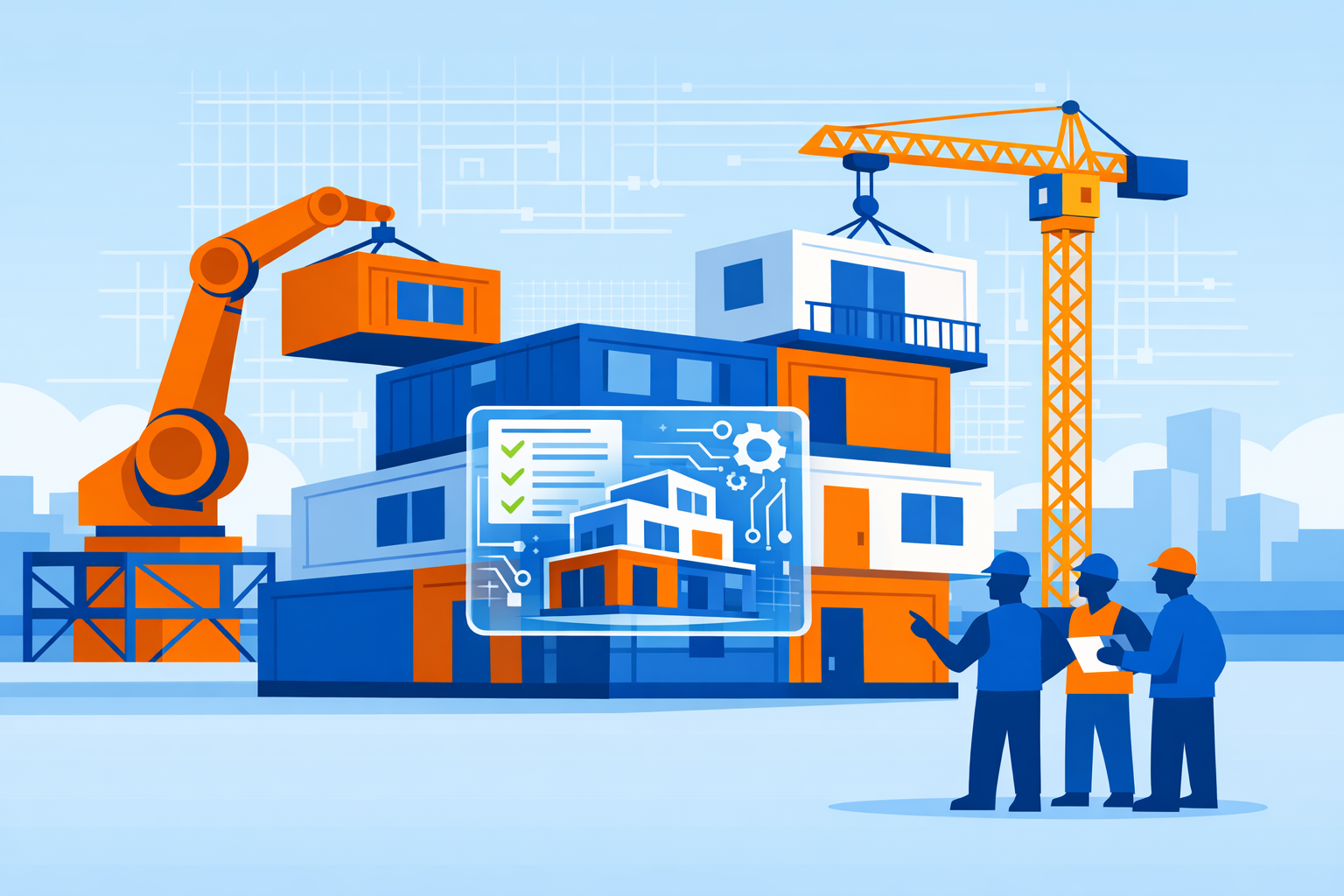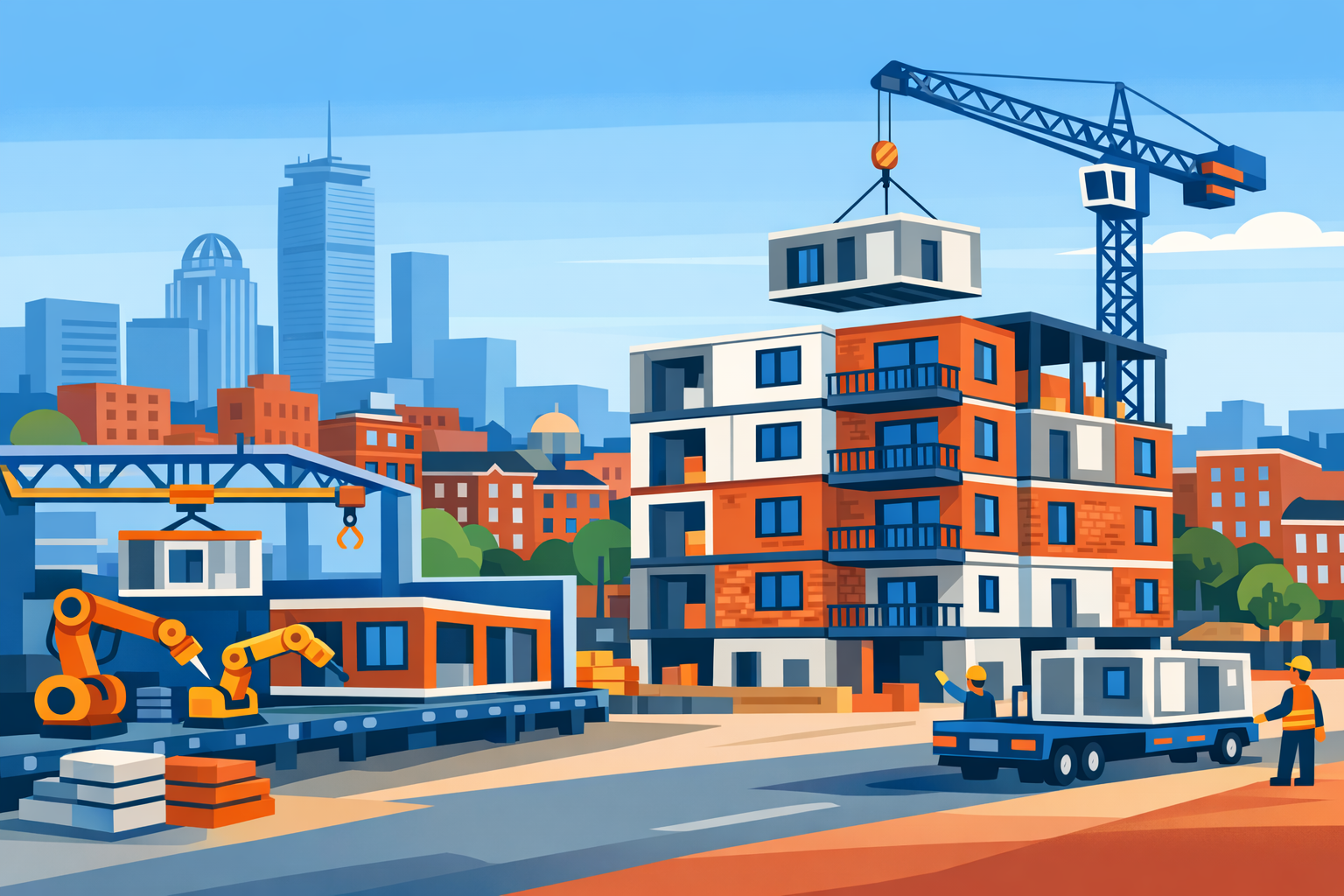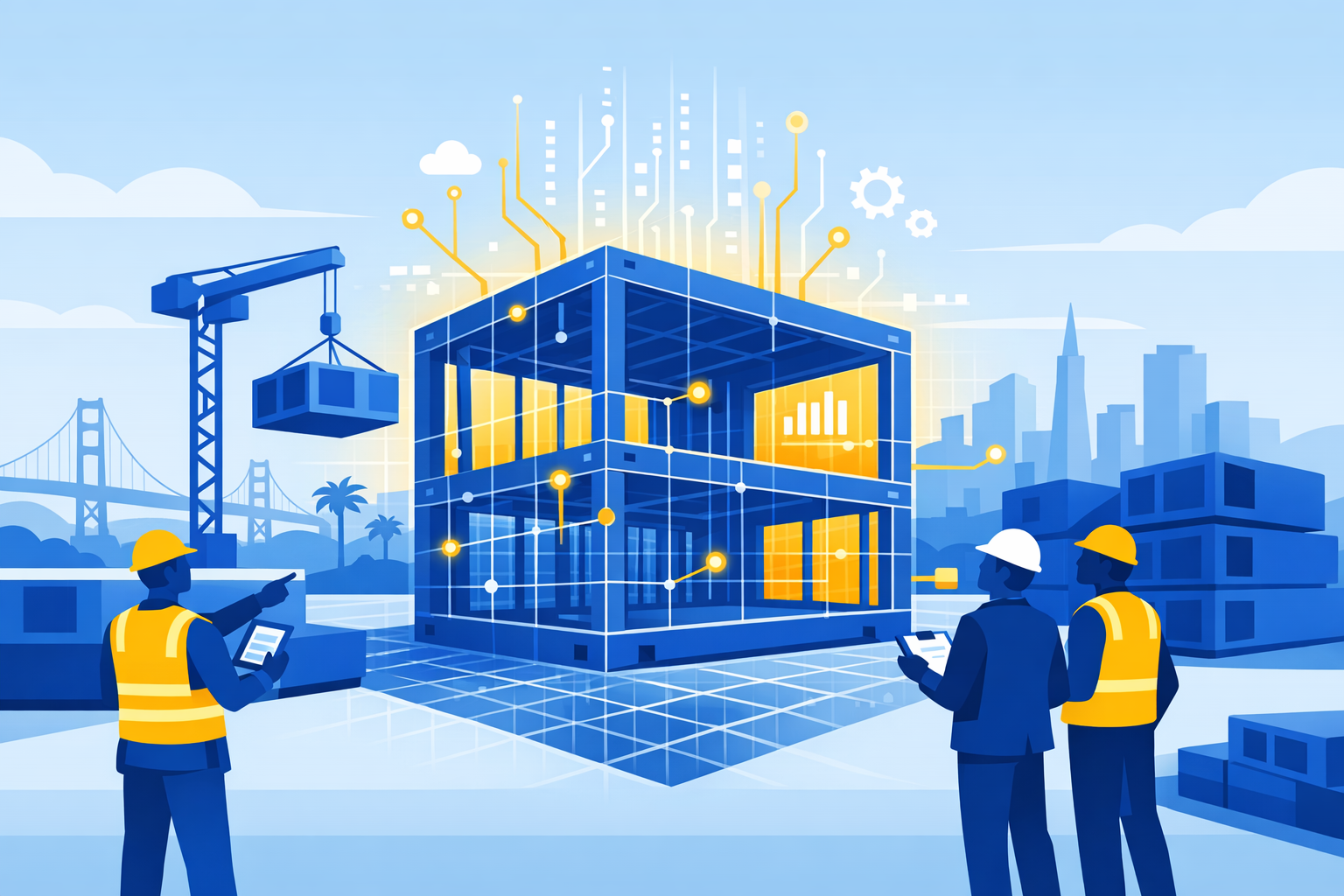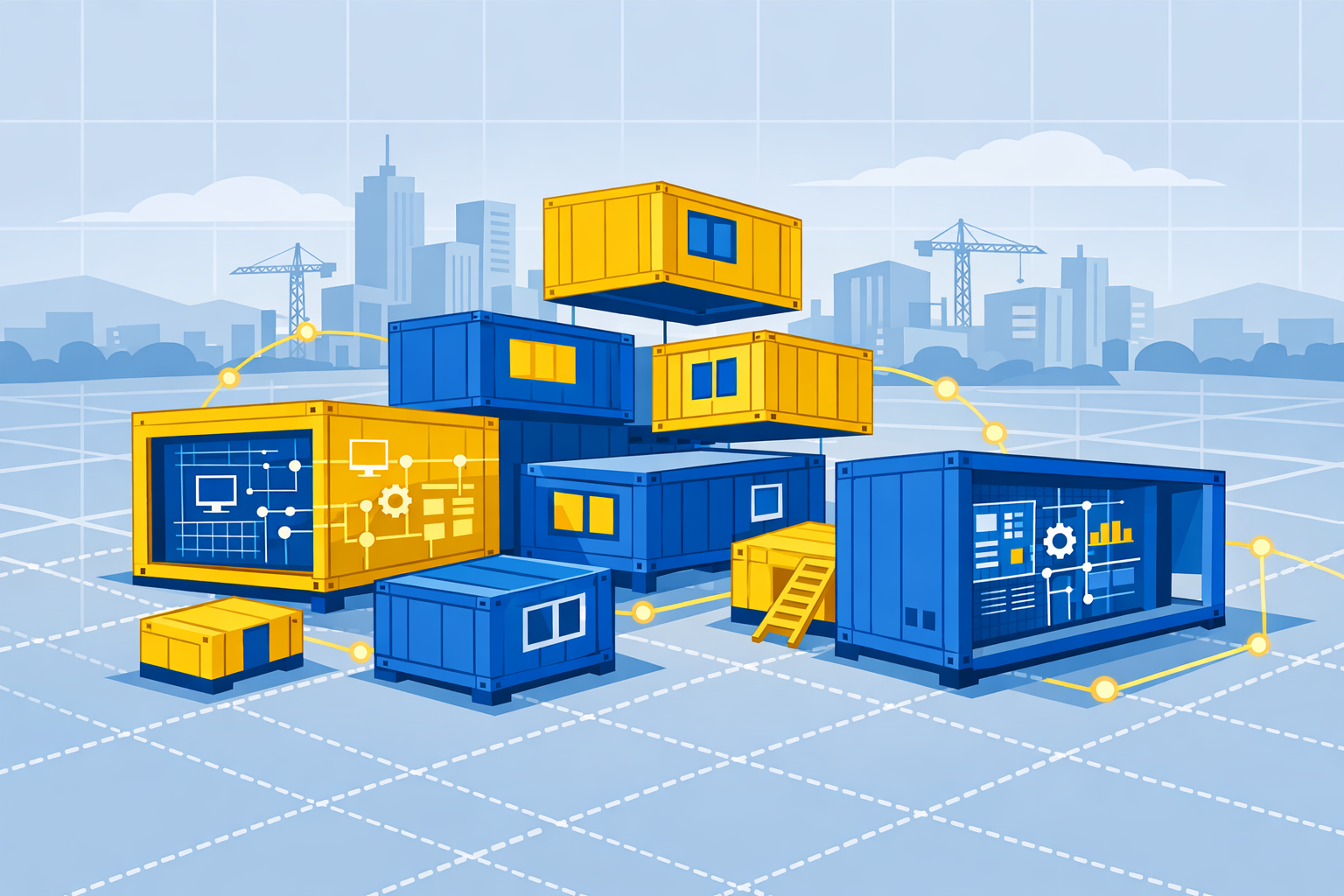
The U.S. Department of Energy's Advanced Building Construction (ABC) Initiative is accelerating state-level pilots to standardize modular, prefabricated, and digital workflows on public works projects, as federal agencies direct hundreds of millions in funding toward industrialized construction methods designed to cut lifecycle costs and improve building performance nationwide.
Background
The ABC Initiative, led by the DOE's Building Technologies Office (BTO), integrates energy-efficiency solutions into high-productivity U.S. construction practices for new buildings and retrofits. The program was established to address a persistent productivity gap: lagging construction sector labor productivity drives up costs for new buildings and retrofit upgrades while limiting adoption of energy-efficient technologies.
BTO has awarded $26.3 million to 40 competitively selected projects under its Advanced Building Construction with Energy-Efficient Technologies & Practices funding opportunity. The effort underpins the ABC Initiative, one of BTO's principal programs for unlocking deeper energy savings in the U.S. building sector, which consumes 40% of the nation's energy and 75% of its electricity.
In fall 2020, DOE launched the Advanced Building Construction Collaborative to help the United States remain globally competitive in high-performance prefabricated and modular approaches for retrofits and new construction. The Collaborative brings together builders, architects, engineers, manufacturers, building owners, developers, trade associations, workforce training programs, government agencies, research institutions, financiers, and utilities.
Details
The ABC Initiative is developing building technologies that can be deployed quickly with minimal onsite construction time, are affordable and market-ready, and leverage related efforts to boost construction industry productivity. Beyond funding research on technologies, software, and digitization, the Initiative coordinates key building sector stakeholders to address workforce training, business models, demand growth, and service delivery.
DOE announced $33.5 million for energy-efficient advanced building construction technologies and practices, targeting deep energy retrofits and new construction technology development, according to the agency. Separately, a collaboration between the National Laboratory of the Rockies, modular manufacturer Model/Z, and affordable housing fund SoLa Impact has examined industrialized construction's potential to reduce costs, timelines, and waste - an approach offering a scalable, cost-effective response to the housing crisis.
At the state level, legislative momentum is aligning with the federal push. Across the country, states are launching pilot programs and extending or eliminating sunset clauses to ensure design-build remains a long-term tool for innovation and efficiency. Key actions in 2025 include:
- Nevada authorized a progressive design-build pilot for the widening of I-80 East. AB 315 grants the Nevada Department of Transportation authority to use progressive design-build on that corridor. Governor Joe Lombardo signed AB 315 into law on June 3, 2025.
- Illinois moved to preserve design-build permissions via SB 2456, extending the state Public Building Commission's authority to use design-build from July 1, 2025, to July 1, 2027. Governor J.B. Pritzker signed the bill on June 16, 2025.
- Missouri repealed the sunset clause restricting political subdivisions from using design-build through HB 199, eliminating the September 1, 2026, expiration date. The bill was sent to Governor Mike Kehoe's desk on May 30, 2025.
- West Virginia's SB 2942 extends the state Department of Environmental Protection's design-build pilot program through 2027 and raises the project cap from $50 million to $75 million.
- Florida advanced two bills expanding the state Department of Transportation's design-build capabilities: SB 462 requires FDOT to use a two-phase award process with proposals from at least three firms, while SB 1662 allows phased performance and payment bonds. Governor Ron DeSantis signed both into law on June 19, 2025.
On the digital delivery side, Building Information Modeling (BIM) is considered the most fundamental technology in construction digital twin applications. The integration of digital twins and BIM can serve nearly all phases of the building lifecycle. Research published in 2025 found that modular construction provides significant benefits over traditional methods - particularly when combined with digital technologies - enabling a faster, safer, leaner, and more sustainable construction environment.
The ABC Collaborative's Factory-Built Housing Pre-Development Pilot Program has $12 million available to fund pre-development activities for factory-built housing manufacturers applying to DOE's Title 17 Clean Energy Financing Program.
Outlook
Industry reporting points to continued backlogs and rising awards for highway and bridge projects heading into 2026. One widely cited global forecast estimates the bridge construction market at $822.8 billion in 2024, growing to $1.1 trillion by 2030 at a 4.7% compound annual growth rate.
For contractors and suppliers, the convergence of federal funding, state pilot expansions, and advancing digital standards signals that public procurement specifications will increasingly favor teams capable of combining prefabricated delivery with documented digital workflows. The ABC Collaborative continues working to accelerate the development, demonstration, standardization, and mainstream adoption of innovative, high-performance construction technologies and processes.