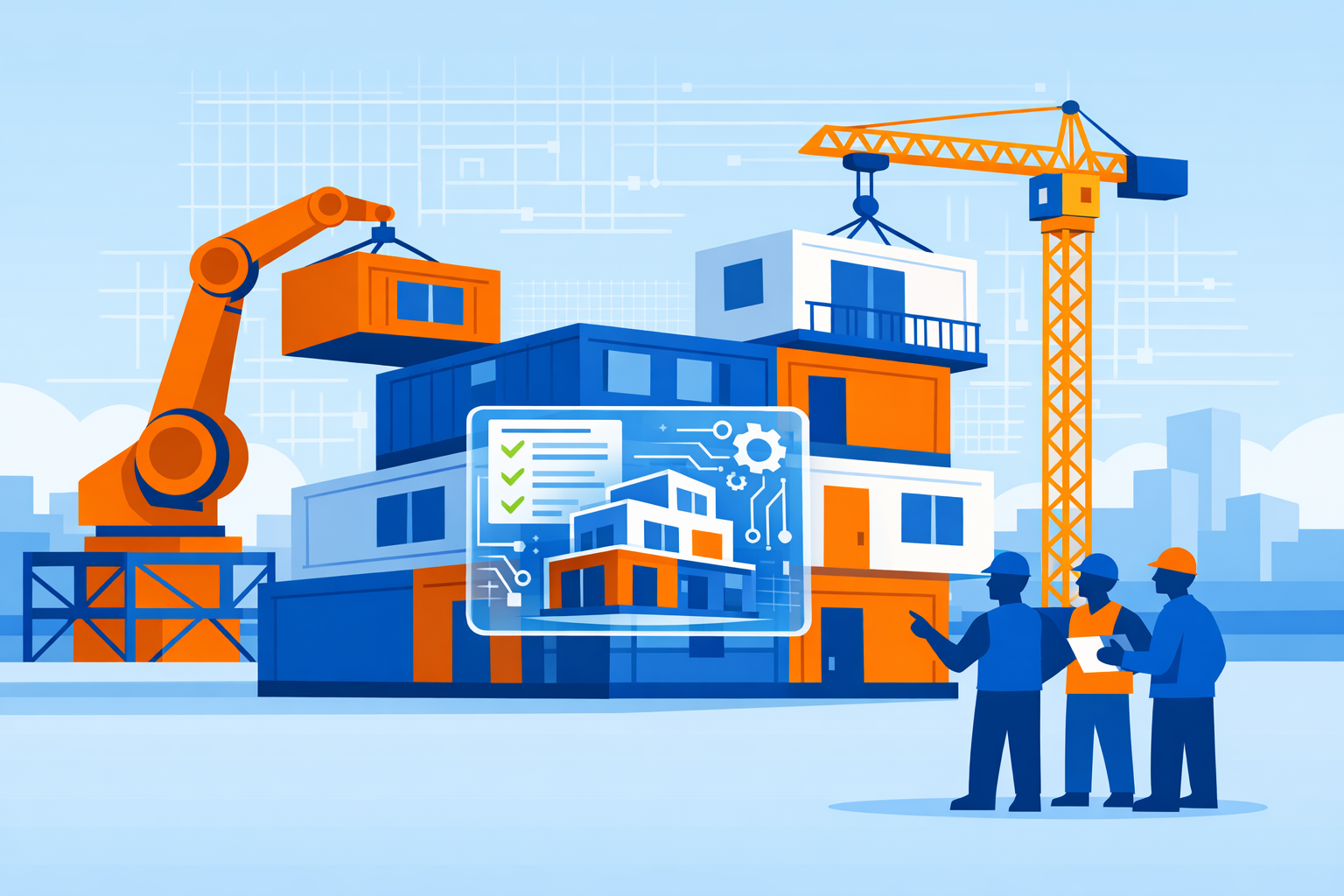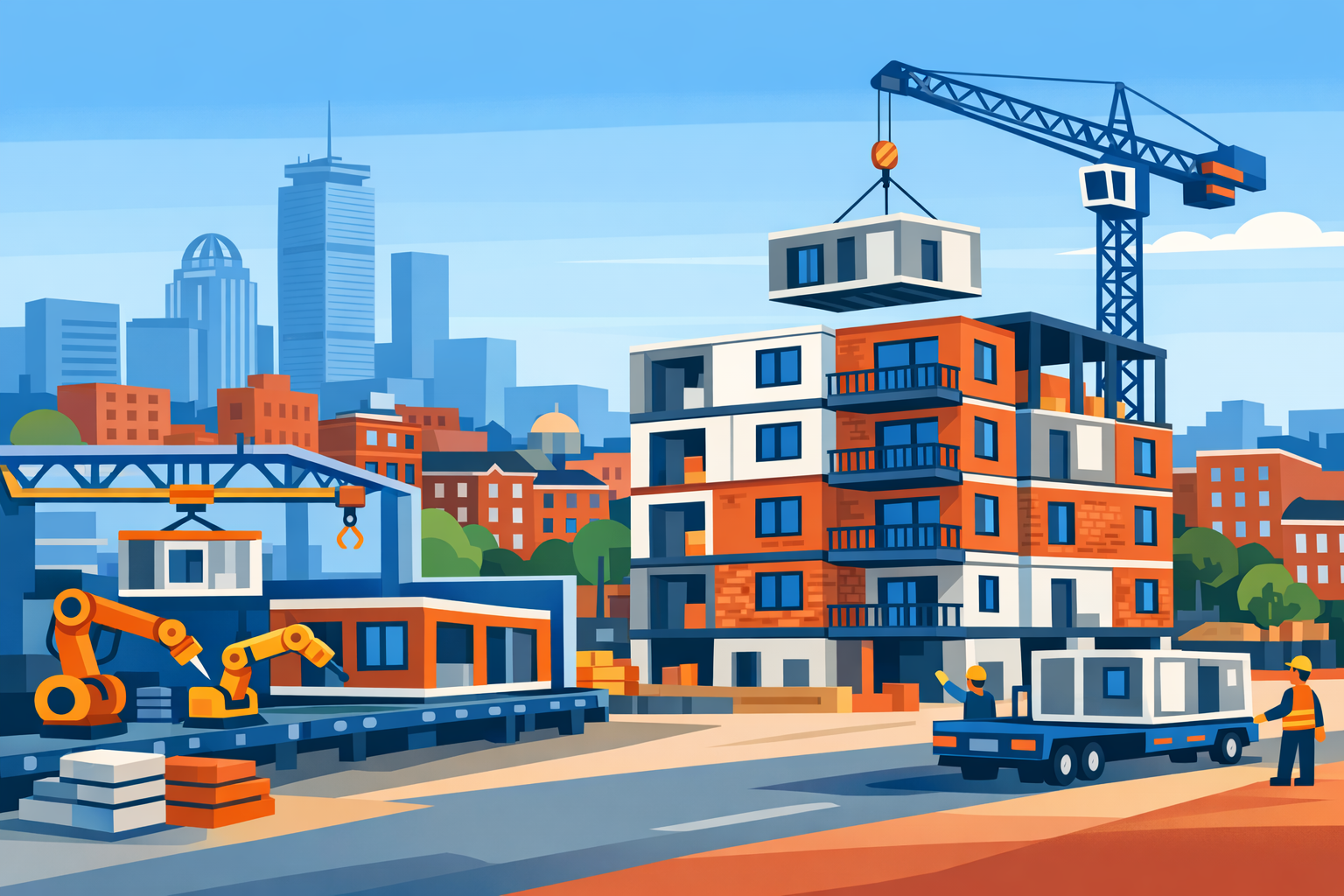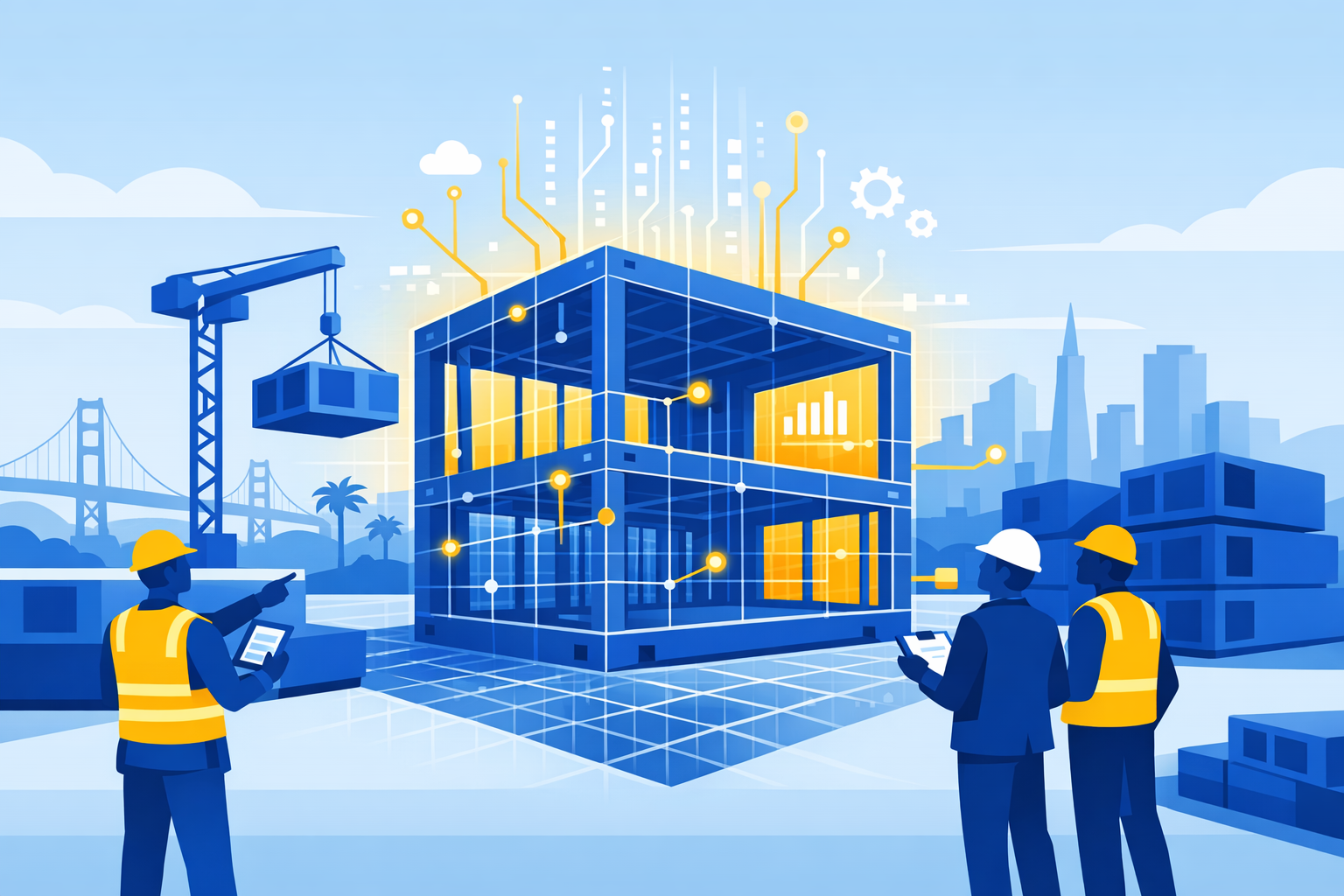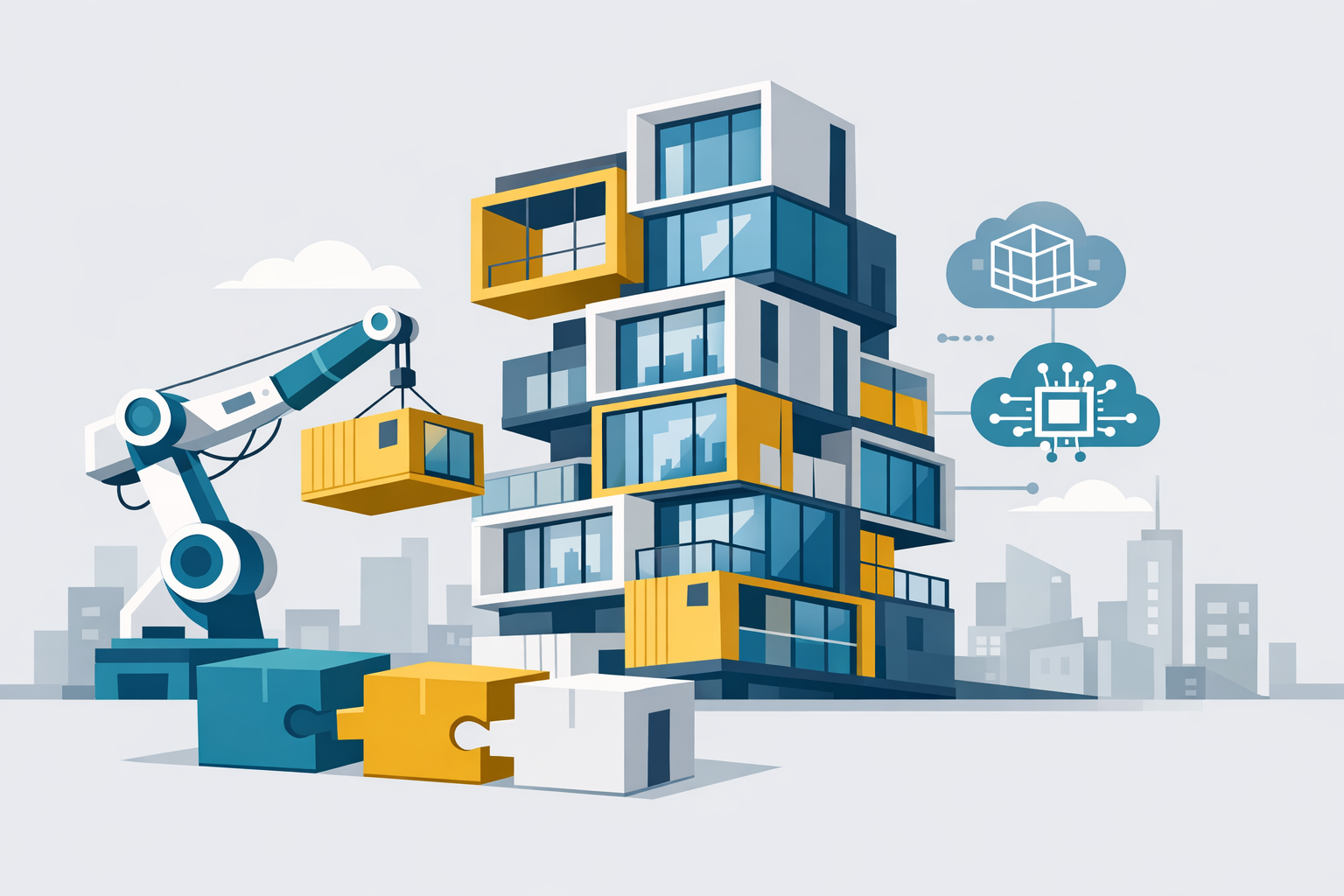
Developers in high-cost, customization-driven markets are adopting modular construction to deliver bespoke designs with greater speed and quality. Advanced prefab technologies, hybrid modular systems, and regulatory reforms are being leveraged to meet premium expectations while maintaining the efficiency of off-site construction.
Background
Modular construction, once centered on volume and standardization, is evolving to accommodate the high customization demanded by premium projects. Hybrid systems-combining traditional and modular methods-allow for architectural flexibility and bespoke features while preserving the delivery speed of factory-built processes.[1] Digital twins, AI-driven design tools, and robotics are increasing design accuracy, quality control, and repeatability, helping modular builds match conventional standards.[2] Real-time cost tracking and margin management platforms are now critical for meeting the tighter cost structures of high-end modular projects.[3]
Details
The global modular construction market is projected to expand from approximately USD 104 billion in 2024 to USD 140.8 billion by 2029, reflecting a compound annual growth rate (CAGR) of about 6.2 percent.[3] In Europe, Germany is a leading market, expected to account for 35 percent of regional revenue in 2025, supported by expedited permitting under Bau-Turbo legislation and robust private equity investment.[4] Developers are increasing the use of heavy robotics, automation, and digital materials passports to raise premium modular output and meet high design requirements.[4]
Prefab Quality and Speed: In 2024, modular home construction timelines ranged from 16 to 31 weeks, compared to more than nine months for traditional builds. On-site assembly typically required about four weeks.[5] Digital and hybrid technologies-including AI, BIM, digital twins, IoT, and robotics-are improving precision, minimizing errors, and ensuring finishes meet luxury standards.[6]
Customization and Cost Control: Hybrid modular systems support custom facades, layouts, and finishes in luxury hospitality, residential high-rises, and mixed-use projects.[1] Integrated cost-management platforms with real-time dashboards are improving project margins by 3 to 4 percentage points through enhanced financial oversight.[3]
Supply Chain and Labor: The sector faces ongoing challenges with skilled labor availability, supply chain coordination, and the capital requirements of factory setup. Modular manufacturers note continuing shortages of trained workers, while establishing production facilities often demands significant upfront investment.[7] Regulatory initiatives in Germany, such as fast-track permitting, are helping to address speed and compliance hurdles.[4]
Outlook
As luxury developers turn to modular solutions, the industry is expected to advance digital integration, automation, and cost discipline. Ongoing improvements in hybrid modular methods, cost transparency, and regulatory frameworks are likely to further close the gap between modular and traditional construction in premium markets.