Washington State Building Code Council schedules final vote on 2024 I-Codes for 16 October, with statewide effect from 3 May 2027
Washington's SBCC is set to formally adopt the 2024 IBC, IRC, IMC, IFC, and UPC on 16 October 2026. The codes take effect statewide on 3 May 2027, with key amendments to EV readiness, single-stair multifamily buildings, and embodied carbon.
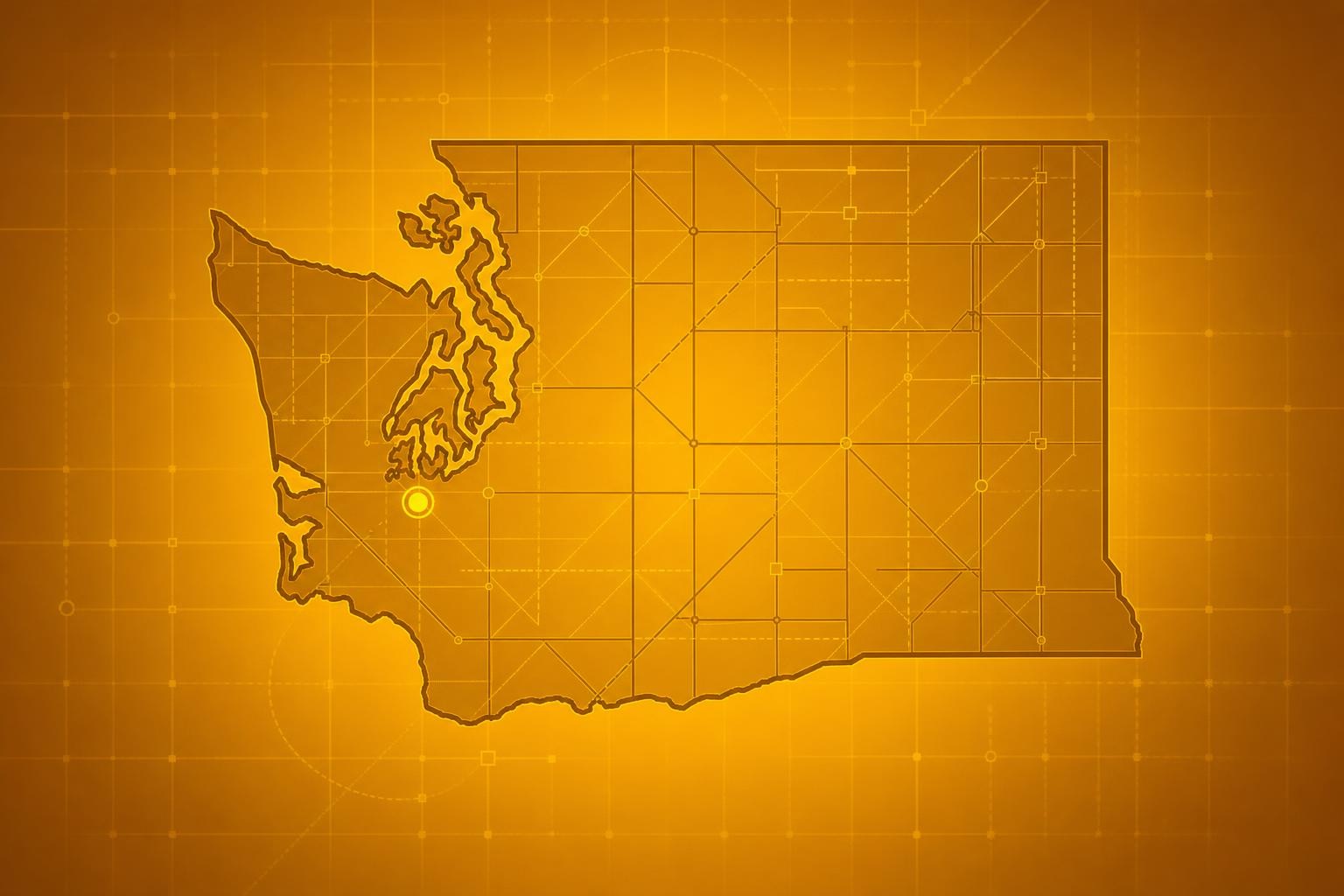
Washington State's Building Code Council (SBCC) is scheduled to hold its final adoption vote on the 2024 family of International Codes on 16 October 2026, at its Olympia meeting. The adopted codes - the 2024 IBC, IRC, IMC, IFC, and Uniform Plumbing Code - will become mandatory in all counties and cities of the state on 3 May 2027, per the amendatory language filed in WAC 51-50-008.
The 3 May 2027 effective date applies statewide. Work permitted before that date continues under the current 2021 I-Code editions, which became mandatory in Washington on 15 March 2024. The authority having jurisdiction determines compliance for any project that straddles the transition.
Procedural path to adoption
The SBCC filed the CR-102 proposed-rule notices for the IBC, IEBC, IRC, IMC, IFC, and UPC on 6 May 2026. A public comment period ran from 6 May through 12 June 2026, with formal rulemaking hearings held on 10 and 12 June 2026. The council's September 25 meeting addressed a venue complication - the usual OPMA-compliant room in the Jefferson Building was unavailable for 16 October - and staff explored alternative dates of 19 or 30 October while also searching for a compliant physical location to preserve the original date. The 16 October target remains the council's stated schedule as of this writing.
A separate energy-code track is on a later timeline. Final adoption of the 2024 Washington State Energy Code - both commercial (WAC 51-11-C) and residential (WAC 51-11-R) provisions - is targeted for 20 November 2026.
Key amendments affecting construction trades
Washington adopts the model I-Codes with state amendments codified in the Washington Administrative Code (WAC). The substantive changes in the 2024 cycle that affect construction trades include:
EV readiness, IBC § 429 (WAC 51-50): For Group R occupancies other than those with individual garages, the EV-ready space requirement drops from 25 percent to 10 percent of total spaces, while the EV-capable requirement rises from 10 percent to 40 percent. The amendment also aligns defined-term usage across IBC § 429.2 and § 429.2.1. Electrical contractors and civil engineers designing parking structures for multifamily and mixed-use projects are directly affected.
Single-stair multifamily buildings, IBC Appendix T (WAC 51-50-5500): A new state appendix permits single-exit stair configurations in residential buildings up to four stories, subject to conditions including NFPA 13D sprinkler systems. The provision expands design options for smaller multifamily projects and is relevant to architects, structural engineers, and fire-protection contractors.
Embodied carbon, IBC Appendix S (WAC 51-50-5400): An optional appendix introduces whole-building life-cycle assessment (LCA) reporting for new commercial buildings. Adoption of Appendix S is voluntary at the local level; jurisdictions that elect to enforce it will require structural and envelope material documentation from general contractors and design teams.
IRC EV readiness alignment (WAC 51-51): The 2024 IRC amendments add EV-supply-equipment definitions and readiness provisions that correlate with the IBC changes, affecting single-family and small residential construction.
The International Wildland-Urban Interface Code amendments remain in a "Reserved" status pending completion of statewide wildfire risk and hazard mapping and are not part of the 16 October adoption package.
What to watch
If the council votes on 16 October as scheduled, the adopted rules will be filed with the state code reviser's office and published in the Washington State Register. Contractors, plan reviewers, and design professionals should confirm the filing date, as the 3 May 2027 effective date is tied to the WAC implementation section rather than the council vote itself. Local jurisdictions in Washington have limited authority to amend the state code; any local modifications must be filed with the SBCC. The energy-code adoption vote in November will complete the 2024 cycle and set the full compliance picture for projects permitted from May 2027 onward.
Written by Construction Trade News's automated desk from the sources above and reviewed before publication. How we work.
Related
Kleemann's MOBIREX MR 100 NEOe electric impact crusher makes its market première at Asphaltica 2026
Kleemann unveiled the MOBIREX MR 100 NEOe at Asphaltica 2026 in Bologna - a fully electric compact impact crusher with 160 kW crushing power and up to 250 t/h feed capacity.
15 Oct 2026 News
NewsIcon closes $200M Series D to manufacture its Titan robotic printer in Austin
Austin-based Icon raised $200M in Series D funding to manufacture its Titan multi-story 3D-printing system and open a new R&D facility in Texas.
15 Oct 2026 News
NewsArcosa stockholders approve CRH's $8.5bn all-cash takeover, clearing the way for a Q1 2027 close
Arcosa stockholders voted on 4 September 2026 to approve CRH's $8.5bn all-cash acquisition of the Dallas-based aggregates and infrastructure products group, with closing now subject to regulatory clearance.
15 Oct 2026