Texas TDLR's 2024 mechanical and residential codes take effect 1 September 2026
Texas TDLR's 2024 IMC, IFGC, and IRC - plus the 2026 NEC - become enforceable on 1 September 2026, driven by the federal A2L refrigerant mandate that the 2021 codes did not address.
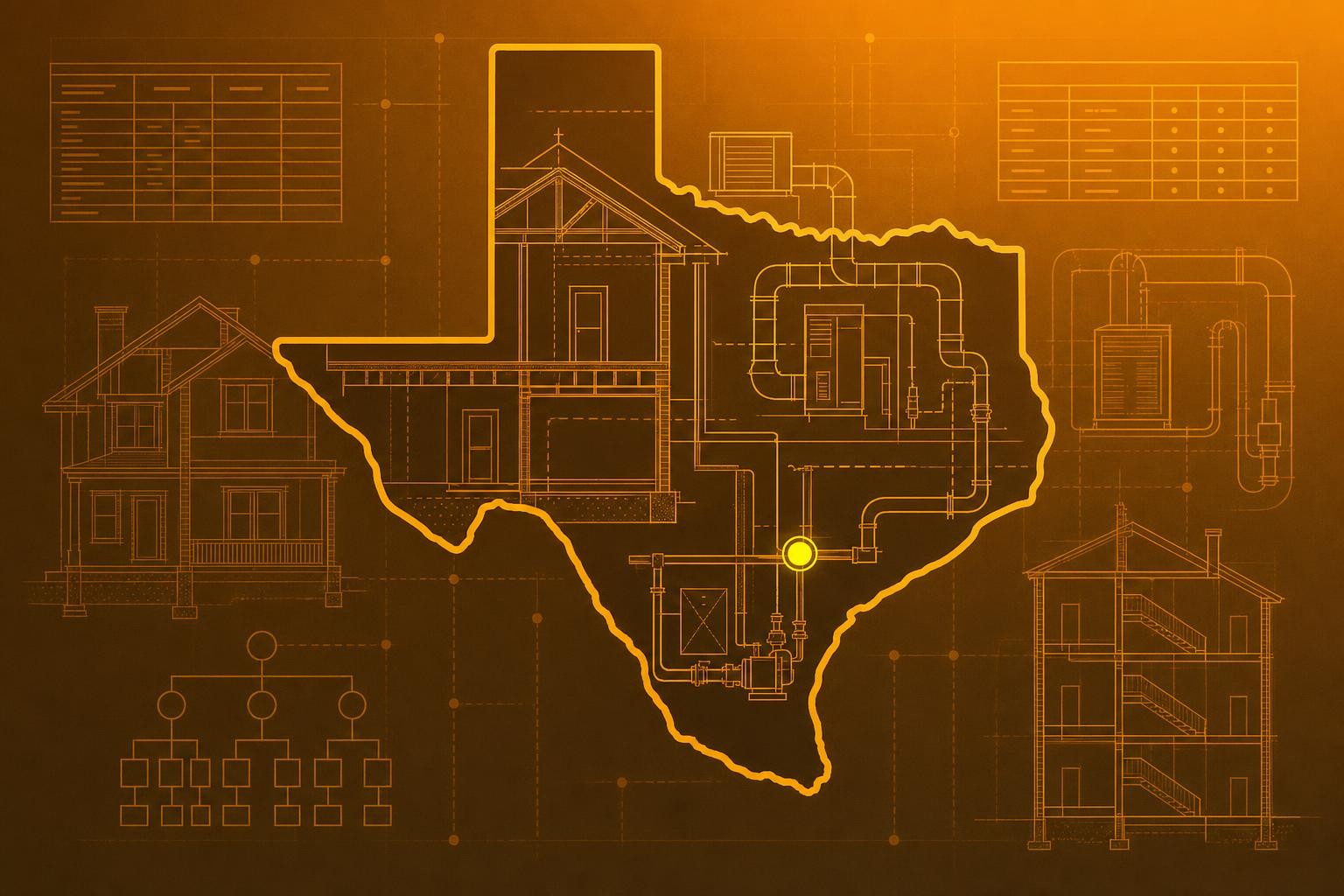
The Texas Department of Licensing and Regulation (TDLR) has adopted the 2024 International Mechanical Code (IMC), 2024 International Fuel Gas Code (IFGC), and 2024 International Residential Code (IRC), with all three codes becoming enforceable statewide on 1 September 2026. The adoption, approved through TDLR's Air Conditioning and Refrigeration Contractors program rulemaking, binds mechanical, HVAC, fuel gas, and residential construction trades across Texas. The 2026 National Electrical Code (NEC) takes effect on the same date under a separate TDLR action.
What TDLR adopted and why it skipped a cycle
Texas historically lags one code cycle behind to give the HVAC industry time to absorb significant changes. This adoption breaks that pattern. TDLR's chief electrical inspector for air conditioning and refrigeration explained that the state's usual practice has been to trail one cycle, but "considering the swiftness of the current federal refrigerant mandates now requiring A2L type refrigerants and their new installation and service protocols, that the 2021 mechanical codes do not address," Texas moved directly to the 2024 editions.
A2L refrigerants are mildly flammable, lower-global-warming-potential alternatives to the high-GWP HFC refrigerants being phased down under EPA rules. The 2024 IBC, IRC, IFC, and IMC contain approved code changes that allow commercial and residential use of A2L refrigerants to replace high-GWP HFC refrigerants. Without the 2024 mechanical codes in force, Texas contractors would have been installing equipment under standards that do not address the refrigerant types now required by federal mandate.
Texas adopted the 2024 IMC, 2024 IFGC, and 2024 IRC following a review process by TDLR. The codes cover:
- 2024 IMC - minimum regulations for mechanical systems, using prescriptive and performance-related provisions
- 2024 IFGC - minimum regulations for fuel gas piping systems, equipment, and gaseous hydrogen systems
- 2024 IRC - building, plumbing, mechanical, fuel gas, energy conservation, and electrical requirements for one- and two-family dwellings and townhouses up to three stories
TDLR also adopted the 2024 Uniform Mechanical Code (UMC) for applications regulated under the Air Conditioning and Refrigeration Contractors program. The adoption gives Texas HVAC contractors, inspectors, engineers, manufacturers, and building owners access to the latest mechanical code requirements addressing public health, safety, energy efficiency, indoor air quality, and system reliability.
The 2026 NEC on the same date
TDLR announced that Texas will adopt the 2026 National Electrical Code effective 1 September 2026. Under the Texas Electrical Safety and Licensing Act, TDLR is required to adopt the latest edition of the NEC as the statewide electrical code.
The 2026 NEC will become the statewide minimum standard for non-exempt electrical work in Texas, applying to work performed both within municipal boundaries and in unincorporated areas. Texas retained one local amendment: Texas will keep an amendment to NEC Section 210.8(F) that does not require GFCI protection for outlets supplying listed outdoor dwelling HVAC equipment, addressing concerns about incompatibility and nuisance tripping involving certain HVAC equipment and Class A GFCI protection.
On permit-dependent work, the applicable code edition turns on when the permitting process begins. When no permit is required, an installation follows the state-adopted code in effect on the date electrical materials or equipment begin to be installed. When a permit is required, the installation generally follows the state-adopted code in effect when the permit is obtained. Municipalities may establish permitting requirements and adopt local amendments to the state-adopted NEC.
McAllen's earlier 2024 IBC adoption
At the municipal level, the City of McAllen - a fast-growing Rio Grande Valley city in Hidalgo County - moved ahead of the state on the structural code. McAllen adopted the International Building Code, 2024 edition, including appendices B, C, D, E, F, G, H, I, J, K, and P. The adoption was enacted by Ordinance 2025-117, adopted 27 October 2025. The 2024 IBC took effect in McAllen on 1 January 2026.[1] McAllen excluded IBC Section 1110.4, which covers adult changing stations.
The McAllen adoption covers general building construction and applies to structural, fire protection, and accessibility trades working within city limits. The TDLR state-level adoptions of the 2024 IMC, IFGC, and IRC operate separately and govern mechanical, fuel gas, and residential construction statewide, including within McAllen.
Trades affected
The 1 September 2026 effective date binds the following trades across Texas:
- HVAC and refrigeration contractors - new A2L refrigerant installation and service protocols under the 2024 IMC and 2024 UMC
- Fuel gas contractors and plumbers - updated piping system requirements under the 2024 IFGC
- Residential builders - structural, mechanical, plumbing, fuel gas, energy, and electrical requirements for one- and two-family dwellings under the 2024 IRC
- Electricians - all non-exempt electrical work transitions to the 2026 NEC; licensing examinations also move to the 2026 edition on 1 September 2026
The relevant rule references are 16 Texas Administrative Code (TAC) Chapter 75, §75.110 for the Air Conditioning and Refrigeration Contractors program, and 16 TAC §73.100 for the electrical adoption.
Where the text of any adopted code is ambiguous in application, the determination belongs to the authority having jurisdiction. Contractors should verify local amendments with the applicable municipal building department before beginning permitted work.
The immediate question for Texas mechanical and electrical contractors is whether projects currently in design or permitting will be submitted before or after 1 September 2026, and which code edition the permit will be issued under. TDLR has not published a published transition grace period for work already under permit; contractors with open permits should confirm the applicable edition directly with TDLR or the local authority having jurisdiction.
Written by Construction Trade News's automated desk from the sources above and reviewed before publication. How we work.
Related
CASE adds three D Series 3-ton mini excavators with zero tailswing and load-sensing hydraulics
CASE Construction Equipment launched the CX30D, CX34D and CX38D on 17 June 2026, filling the 3-ton class with zero-tailswing machines powered by a 24.4 hp Kubota engine.
10 Sept 2026 News
NewsSimplar Foundation study finds multiskilled U.S. construction crews cut idle time by 68% and post safety rates 57% below industry average
A first-ever national field study on multiskilling in U.S. construction finds a 39% jump in productive crew time and a total recordable incident rate 57% below the industry benchmark.
10 Sept 2026 Codes
CodesOakland adopts 2025 California Building Standards Code with FlexPath and Electric Readiness amendments, effective 1 January 2026
Oakland's 2025 Title 24 adoption - with FlexPath and Electric Readiness reach codes - took effect 1 January 2026, and AB 130 locks in residential standards until 1 June 2031.
10 Sept 2026