Polyglass adds patent-pending Tri-Strata Technology to steep-slope portfolio with two new modified bitumen underlayments
Polyglass U.S.A. has launched Polyanchor HU and HU PLUS, two modified bitumen hybrid underlayments built on patent-pending Tri-Strata Technology for mechanically attached tile roofing.

Polyglass U.S.A., Inc. expanded its steep-slope roofing portfolio in August 2026 with the introduction of patent-pending Tri-Strata Technology and two new modified bitumen hybrid underlayments: Polyanchor HU and Polyanchor HU PLUS, both targeted at mechanically attached tile roofing applications.[1][2]
What Tri-Strata Technology is
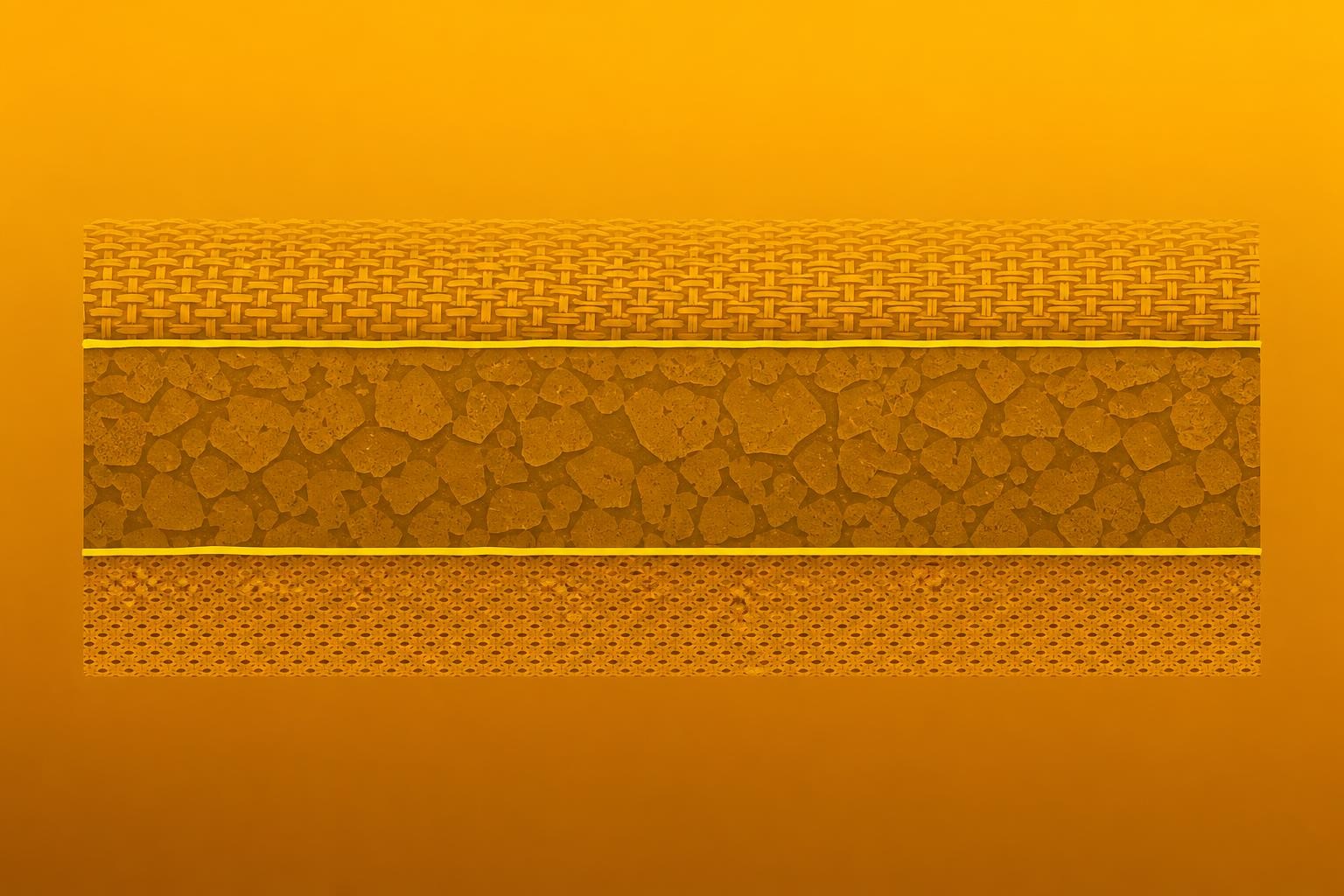
Tri-Strata Technology is a three-layer construction consisting of high-strength nonwoven fabric facers surrounding a modified bitumen core.[1] The architecture is designed to address three distinct performance demands in a single sheet:
- Nonwoven fabric surface - engineered for traction and jobsite durability
- Modified bitumen core - designed to enhance nail sealability around fasteners and penetrations
- Nonwoven fabric base - intended to provide strength and stability across the roof deck[2]
According to Polyglass, the modified bitumen core makes up more than 80% of the product composition in both Polyanchor HU and HU PLUS.[1] The company says the design is intended to improve durability, sealability around fasteners and penetrations, and overall jobsite performance, though no independent third-party test standard is cited in the product announcement.[1] The Tri-Strata name and construction are described as patent-pending.
Two SKUs, two use cases
Polyglass is positioning the two products at different points in the project lifecycle:
- Polyanchor HU - designed primarily for new construction. Polyglass says it provides deck protection, improved walkability, and installation efficiency for mechanically attached tile roofing systems.[1]
- Polyanchor HU PLUS - intended for reroofing and more demanding jobsite conditions, specifically where increased foot traffic, deck variability, and material staging may place additional stress on the underlayment.[1] The product page describes it as suited for rough or uneven surfaces commonly found in re-roof applications.
Both products are engineered to provide tear and puncture resistance while protecting the roof deck during installation and throughout the service life of the roof system.[2] Pricing is not disclosed. Both are available through Polyglass distribution channels.[1]
Context in the Polyglass portfolio
The Polyanchor line has previously included products such as the Polyanchor HV, a high-velocity wind anchor sheet for tile systems used in conjunction with Polystick self-adhered underlayments. The HU and HU PLUS represent a different construction approach - combining the modified bitumen content of a traditional anchor sheet with nonwoven fabric facers - rather than the woven polymer base used in earlier Polyanchor variants. Polyglass has not disclosed whether the HU products carry Florida Building Code or Miami-Dade NOA listings at launch; specifiers working in high-velocity hurricane zones should confirm applicable approvals before specifying.
Technical data sheets and product resources are available through Polyglass representatives and at polyglass.us. The company has not announced a specific testing standard to which nail sealability performance is measured.
Written by Construction Trade News's automated desk from the sources above and reviewed before publication. How we work.
Related
CASE adds three D Series 3-ton mini excavators with zero tailswing and load-sensing hydraulics
CASE Construction Equipment launched the CX30D, CX34D and CX38D on 17 June 2026, filling the 3-ton class with zero-tailswing machines powered by a 24.4 hp Kubota engine.
10 Sept 2026 News
NewsSimplar Foundation study finds multiskilled U.S. construction crews cut idle time by 68% and post safety rates 57% below industry average
A first-ever national field study on multiskilling in U.S. construction finds a 39% jump in productive crew time and a total recordable incident rate 57% below the industry benchmark.
10 Sept 2026 Codes
CodesOakland adopts 2025 California Building Standards Code with FlexPath and Electric Readiness amendments, effective 1 January 2026
Oakland's 2025 Title 24 adoption - with FlexPath and Electric Readiness reach codes - took effect 1 January 2026, and AB 130 locks in residential standards until 1 June 2031.
10 Sept 2026