Bangladesh garment industry seeks BNBC amendments on mixed-occupancy dining provisions, no effective date set
BGMEA and BKMEA have petitioned Bangladesh's Housing and Public Works Minister to amend BNBC provisions that classify factory dining areas as non-compliant. No amendment has been adopted.
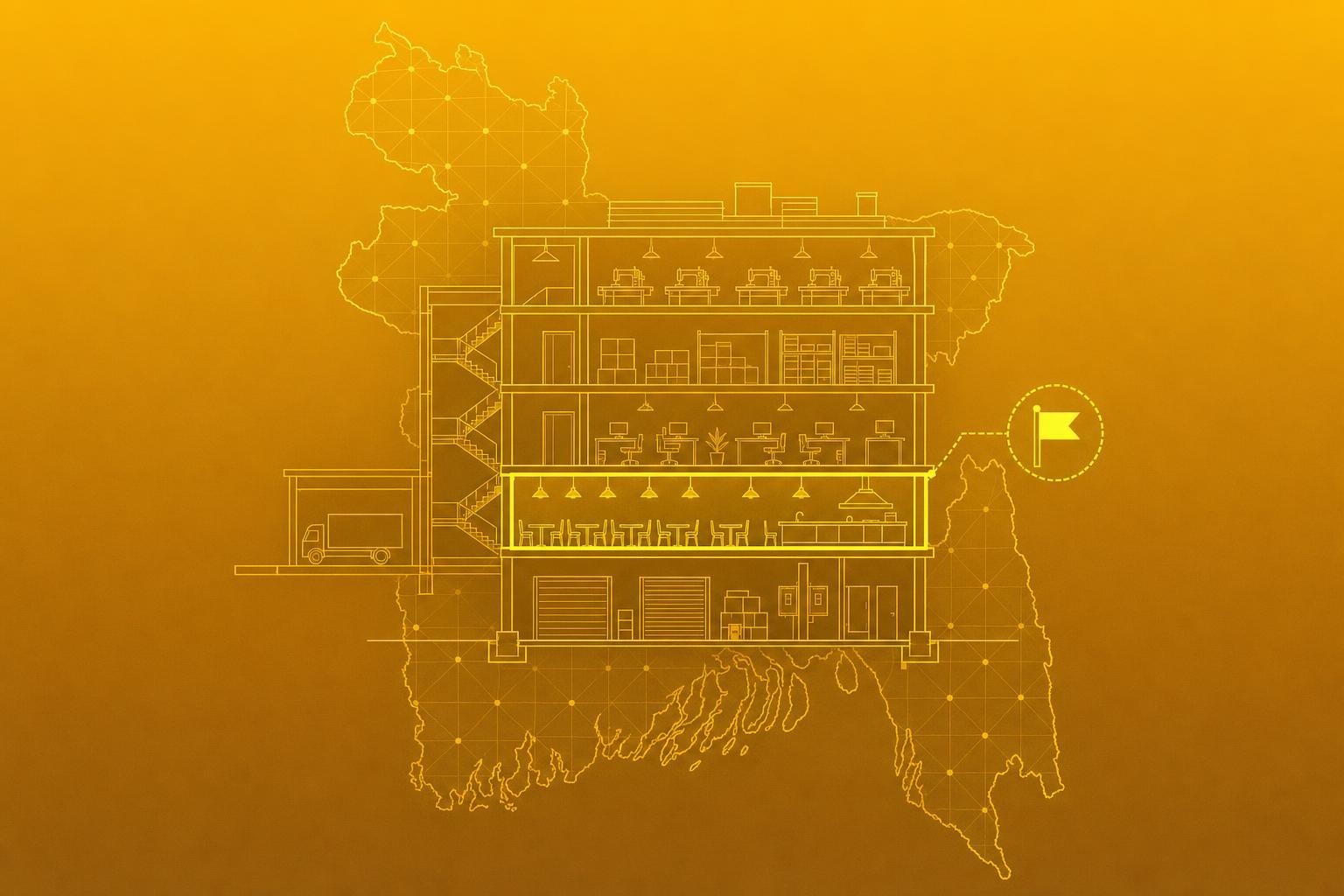
Bangladesh's garment manufacturers have formally asked the national government to amend the Bangladesh National Building Code (BNBC) - a federal instrument administered by the Ministry of Housing and Public Works - to resolve what the industry describes as contradictory provisions on mixed-occupancy factory buildings. No amendment has been adopted, and no effective date has been set.[1]
What the industry is asking
Leaders from both the Bangladesh Knitwear Manufacturers and Exporters Association (BKMEA) and BGMEA met Housing and Public Works Minister Zakaria Taher Sumon to discuss concerns over certain BNBC provisions that render factories non-compliant despite being built in accordance with existing laws.
The specific provision at issue sits in the BNBC's occupancy-classification table. One provision allows mixed occupancies if separated by fire-resistant construction, while another categorises dining - classified as assembly occupancy - as "Not Permitted (NP)" alongside industrial use. Industry representatives describe this as contradictory and say that different auditors interpret the code inconsistently, resulting in compliance concerns that affect worker welfare and operational continuity.
The push gathered pace following a formal letter from Epic Garments Manufacturing Co Ltd (Unit-7) to the BGMEA president. In the letter, dated 18 December 2025, the company noted that providing eating and dining facilities for factory workers is mandated under local labour law and that such facilities are used exclusively by workers during working hours.
The industry also cautioned that requiring separate dining buildings would significantly increase costs and create land constraints within factory premises.
The BNBC - first published in 1993 and gazetted in its current edition in February 2021 - sets minimum standards for building construction across Bangladesh, including fire-exit specifications, floor area ratios, and occupancy classifications. Key provisions cover building setbacks, maximum ground coverage, fire safety, and universal accessibility, as well as technical requirements such as fire-exit specifications and floor area ratios. The authority having jurisdiction for interpretation and enforcement is the Ministry of Housing and Public Works and its subordinate agencies.
Industry and government response
The minister assured that if the industry provides a detailed account of the contradictions, the government will take the matter into consideration.
Bangladesh's readymade garment exporters have formed a high-level committee to review BNBC provisions, particularly those affecting factory layouts. Industry leaders expect the committee to submit recommendations aimed at ensuring greater clarity in the BNBC while maintaining compliance with globally accepted safety standards.
The BNBC review sits within a broader legislative examination. On 30 July 2026, the government formed a three-member high-level committee, headed by the Home Minister, to review existing laws and regulations relating to building construction and urban development in the capital and make them more contemporary and effective. That committee has been constituted to review the Building Construction Act, 1952 and the Town Improvement Act, 1953, and to recommend necessary amendments, revisions and modifications to further strengthen the legal framework. Proposed amendments to the relevant laws and regulations, based on the committee's recommendations, will be placed before the Cabinet meeting.
The BNBC review and the legislative committee are parallel processes; it is not yet established whether any BNBC amendment would require a corresponding change to the Building Construction Act, 1952. That determination belongs to the authority having jurisdiction.
Who is affected
The dispute directly concerns:
- Garment factory owners and operators whose buildings contain worker dining facilities within the same structure as production floors
- Structural and fire-safety engineers advising on BNBC compliance
- Building inspectors and auditors applying the occupancy-classification table
BGMEA Senior Vice-President Inamul Haq Khan Bablu has said businesses face practical difficulties due to inconsistent interpretation of BNBC provisions while implementing field-level offices. BGMEA's formal position, also raised with Prime Minister Tarique Rahman on 22 July 2026, is that compliance with the BNBC should be simplified to facilitate factory expansion.
What to watch
The industry committee's written submission to the Ministry of Housing and Public Works will be the next substantive step. Until the ministry issues a formal gazette notification amending the relevant occupancy-classification provisions of the BNBC, the current text governs all building permit applications. Nothing in this report constitutes legal advice; operators with compliance questions should consult the authority having jurisdiction.
Written by Construction Trade News's automated desk from the sources above and reviewed before publication. How we work.
Related
CASE adds three D Series 3-ton mini excavators with zero tailswing and load-sensing hydraulics
CASE Construction Equipment launched the CX30D, CX34D and CX38D on 17 June 2026, filling the 3-ton class with zero-tailswing machines powered by a 24.4 hp Kubota engine.
10 Sept 2026 News
NewsSimplar Foundation study finds multiskilled U.S. construction crews cut idle time by 68% and post safety rates 57% below industry average
A first-ever national field study on multiskilling in U.S. construction finds a 39% jump in productive crew time and a total recordable incident rate 57% below the industry benchmark.
10 Sept 2026 Codes
CodesOakland adopts 2025 California Building Standards Code with FlexPath and Electric Readiness amendments, effective 1 January 2026
Oakland's 2025 Title 24 adoption - with FlexPath and Electric Readiness reach codes - took effect 1 January 2026, and AB 130 locks in residential standards until 1 June 2031.
10 Sept 2026