Construction labor productivity in the United States has fallen more than 30 percent since 1970, even as overall economic productivity doubled over the same period[1]. Against that backdrop-and with the industry still needing an estimated 439,000 net new workers in 2025 alone[2]-the federal government is intensifying its push to industrialize how America builds. At the center of that effort is the Advanced Building Construction (ABC) Initiative, a program led by the U.S. Department of Energy's (DOE) Building Technologies Office (BTO) that is entering a critical phase of standards publication, procurement reform, and scaled pilot activity in 2026.
For suppliers, general contractors, engineers, and project managers, the current period represents both a compliance inflection point and a market opportunity-provided firms understand what the initiative requires and how to engage.
What the ABC Initiative Is-and Why It Is Gaining Urgency
The DOE's Advanced Building Construction Initiative integrates energy-efficiency solutions into highly productive U.S. construction practices for both new buildings and retrofits. Led by the Building Technologies Office[3], the program targets a fundamental structural problem: while industries such as manufacturing and communications have transformed through digitization and process improvements, U.S. construction productivity has consistently declined since 1968[4].
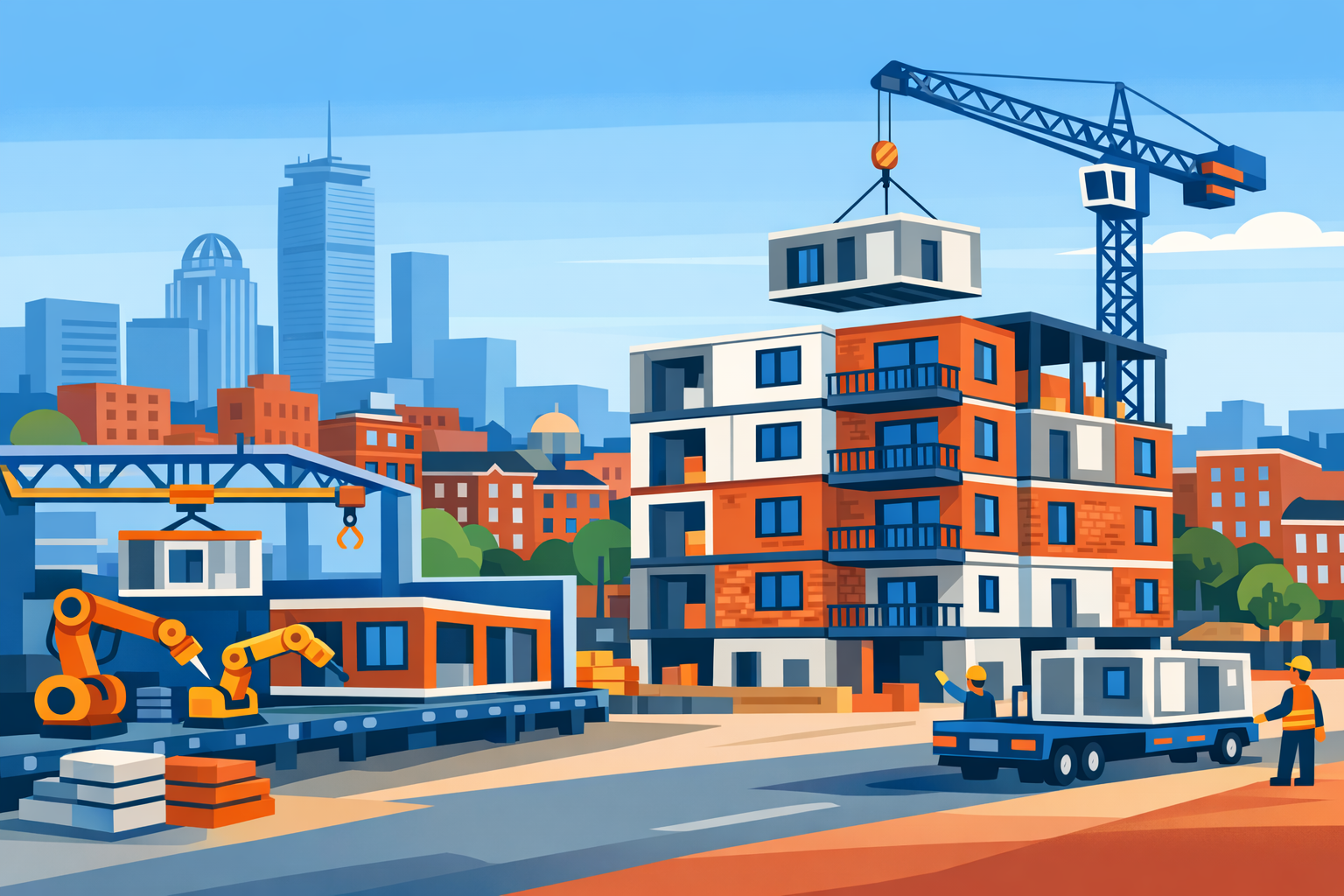
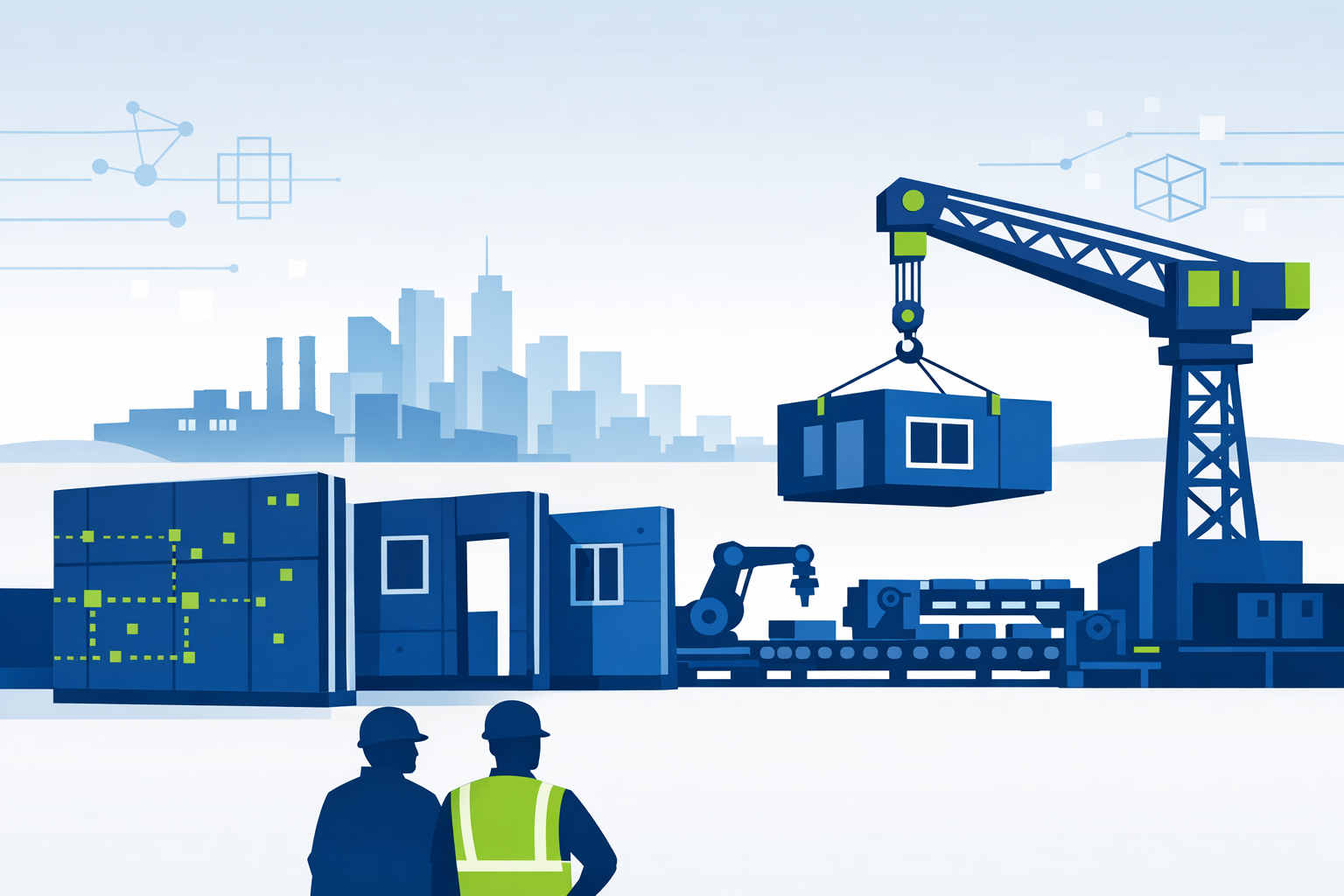
The ABC Initiative's response is industrialization-shifting construction from the job site to the factory. Factory and off-site construction methods have the potential to produce higher quality and faster construction timelines, improve productivity, increase integration of energy-efficiency technologies, and provide workers with controlled conditions at lower costs. This is not theoretical: the ABC Initiative accelerates the speed and scale of U.S. building decarbonization through industrialized innovations[5] that deliver low-carbon, affordable buildings and retrofits at commercial scale.
The program uses a two-pronged strategy: funding new technologies through competitive grants, and engaging private and public sector stakeholders across the buildings industry.
Federal Standards and Funding: What Has Been Published
The ABC Initiative's standards push sits within a broader federal movement. In June 2022, a government-wide National Initiative to Advance Building Codes launched, requiring federal departments and agencies to review funding and financing of building construction to ensure projects follow updated model codes[6], including the International Building Code (IBC), the International Residential Code (IRC), and the International Energy Conservation Code (IECC).
DOE leveraged $225 million in funding through the Bipartisan Infrastructure Law to support adoption and implementation of updated building energy codes, such as the IECC and International Green Construction Code (IgCC).
On the technology funding side, DOE has committed significant capital to demonstration projects:
- DOE awarded $31.8 million to seven project teams to demonstrate how advanced construction techniques integrated with energy-efficient technologies can seed the next generation of building retrofit solutions.
- A separate round announced $33.5 million for energy-efficient advanced building construction technologies and practices, targeting deep energy retrofits and new construction innovations.
- An earlier foundational round saw DOE's Building Technologies Office award $26.3 million to 40 competitively selected projects[7] to advance the initiative's goals.
Demonstrations span a wide geographic range-from low-rise multifamily retrofits in Albany, New York, to modular panel systems in Oak Ridge, Tennessee-signaling federal intent to validate replicable models across climate zones and building types.
Procurement Reform: The 2026 Landscape
Standards publication alone does not drive adoption. The critical lever is procurement reform-changing how federal agencies buy construction services and components.
In 2026, that reform is well underway. A series of executive orders and a major rewrite of the Federal Acquisition Regulation (FAR) are reshaping federal contracting. The FAR overhaul, targeted for completion in FY2026, emphasizes commercial solutions and best value[8]-a direct tailwind for standardized modular components and off-the-shelf industrialized construction products.
A concrete example arrived in April 2026, when the Army's Mission and Installation Contracting Command awarded its first enterprise-wide architect-engineer contract vehicle-20 A-E IDIQ contracts across four geographic regions with a 10-year ordering period from April 2026 through March 2036[9]. Services explicitly include advanced capabilities like Building Information Modeling (BIM)[9], and the vehicle carries a total potential capacity of nearly $1.25 billion across five regions[9].
On the digital procurement front, construction procurement has historically relied on emails, phone calls, and spreadsheets-an approach that reduces visibility, weakens negotiating power, and creates data gaps[10]. Federal mandates for interoperable data systems are pressing construction firms to replace siloed workflows with connected platforms that feed compliance, ESG, and performance data in real time. Firms already familiar with this space-including through earlier coverage of unified cybersecurity standards for modular construction and digital twin workflows-will recognize this as a continued policy direction.
Pilot Programs and Early Adopters: Who Is Leading
The ABC Collaborative[11]-the initiative's industry engagement entity-brings together building owners, developers, financiers, utilities, and researchers to "accelerate the development, demonstration, standardization, and mainstream adoption of innovative, high-performance construction technologies."
Several early demonstration projects illustrate what adoption looks like in practice:
- Modular affordable housing: National Laboratory of the Rockies partnered with modular manufacturer Model/Z and affordable housing fund SoLa Impact to assess the potential of industrialized construction to reduce costs, timelines, and waste.
- Zero-energy modular homes: A Burlington, Vermont, team is developing a state-of-the-art zero-energy modular (ZEM) home construction system, including factory designs for multifamily affordable units.
- Prefabricated retrofit panels: Oak Ridge National Laboratory, in collaboration with the University of Tennessee and industry partners, is demonstrating a modular exterior panel retrofit solution using advanced manufacturing techniques on residential and commercial sites.
Regions driving early adoption include the Southeast, Northeast, and Southwest-aligning with the Army's new A-E IDIQ regional coverage-with climate zones 3 and 4 (including California and Pacific Northwest metros) seeing particularly active modular multifamily activity.
Key Pillars and Program Actions at a Glance
The following table summarizes the initiative's core components, the federal mechanisms driving each, and the stakeholders most directly affected.
| Initiative Pillar | Primary Mechanism | Target Outcome | Key Stakeholders |
|---|---|---|---|
| Modular Component Standardization | DOE/BTO Funding Opportunity Awards | Reproducible off-site manufacturing at scale | Manufacturers, suppliers, national labs |
| Energy Efficiency Integration | R&D grants via FOA competitions | 50-75% reduction in thermal energy loads | Project teams, universities, contractors |
| Digital Procurement Reform | GSA & FAR overhaul (target FY2026) | Faster, commercial-first acquisition | Federal agencies, GCs, procurement officers |
| Interoperable Data Platforms | BIM & digital twin protocol alignment | Cross-agency data sharing and compliance | Engineers, IT leads, AEC firms |
| Workforce & Market Readiness | ABC Collaborative industry partnerships | Scaled adoption, workforce training | Trades, developers, finance, utilities |
How Firms Can Participate: A Practical Roadmap
For construction companies-whether general contractors, specialty manufacturers, or engineering consultants-the path to ABCI alignment involves five clear steps:
Step 1 - Assess compliance with current federal standards. Determine whether existing practices meet the latest IBC, IRC, and IECC editions. According to DOE, nearly half of states' residential energy codes are currently at least 15 percent less efficient than the 2021 IECC. That gap is both a risk and an entry point.
Step 2 - Register with the ABC Collaborative. Participation provides access to pilot project opportunities, technical assistance, and cross-sector connections with building owners, financiers, and utilities.
Step 3 - Monitor DOE Funding Opportunity Announcements (FOAs). Past rounds have ranged from $26.3 million to $33.5 million. Firms with off-site manufacturing, advanced retrofit, or technology integration capabilities should track active FOAs through DOE's eXCHANGE portal.
Step 4 - Align digital workflows with BIM and interoperability requirements. Federal project delivery increasingly depends on BIM-linked procurement and compliance documentation. Evaluate current software infrastructure against emerging federal interoperability protocols.
Step 5 - Prepare for FAR reform and commercial-first procurement. Document standard product offerings, certifications, and past performance data. The FAR overhaul favors commercially available solutions-firms that can demonstrate a standardized, reproducible product line will hold a competitive advantage on reformed contract vehicles.
Risk, Safety, and Accountability Considerations
Industry analysts note that the pace of ABCI implementation introduces real risks. Standardization of modular components raises questions about jurisdictional code harmonization: without federal resilience and energy conservation requirements, federally assisted construction defaults to locally adopted codes and standards[6], creating compliance complexity for firms operating across state lines.
Quality assurance is another active concern. While prefabrication in a factory setting may improve the performance of modular buildings compared to traditional site-built structures[12], a DOE-funded three-year study spanning Los Angeles, San Francisco, Philadelphia, and Seattle found energy performance between modular and site-built multifamily buildings was comparable-suggesting that factory construction's productivity gains do not automatically translate into superior energy outcomes without proper design and inspection protocols.
For firms participating in federal pilot programs, compliance documentation and independent inspection at both factory and job site stages will be essential accountability requirements.
FAQ
What is the ABC Initiative, and who runs it? The Advanced Building Construction (ABC) Initiative is a program led by the U.S. Department of Energy's Building Technologies Office (BTO). It integrates energy-efficiency solutions into modernized U.S. construction practices, funding technology development and engaging industry stakeholders through the ABC Collaborative.
How can a construction firm access ABC Initiative funding? Firms can apply through DOE Funding Opportunity Announcements (FOAs) posted on DOE's eXCHANGE portal. Past rounds have been open to manufacturers, national laboratories, universities, and private companies with relevant construction technology capabilities. Joining the ABC Collaborative is a recommended first step for market intelligence and networking.
What does the FAR overhaul mean for construction contractors? The FAR rewrite, targeted for completion in FY2026, moves federal procurement toward commercial-first, best-value solutions. Contractors should expect agencies to favor standardized, commercially available products and streamlined contract vehicles such as GSA MAS schedules and GWACs over custom government-specified builds.
Is BIM mandatory for federally funded construction projects? BIM requirements vary by agency and contract type. However, recent federal contracting actions-including the Army's enterprise A-E IDIQ vehicle-explicitly include BIM as a covered service. Firms should treat BIM capability as a baseline competitive requirement for federal project work.
Which regions are seeing the most ABCI-related activity? Demonstration projects span multiple climate zones and regions, with notable activity in the Southeast (Oak Ridge, Tennessee), Northeast (Albany, New York; Burlington, Vermont; Philadelphia), and West Coast (Los Angeles, San Francisco). The Army's new A-E contract vehicle covers the Southeast, Midwest, Northeast, Southwest, and West regions.
What are the key safety and quality risks of industrialized construction at scale? Code harmonization across state lines, factory inspection rigor, and supply chain traceability are the primary risk areas. Firms should invest in independent third-party quality assurance at factory and job site stages and ensure compliance documentation is audit-ready for federal project delivery requirements.