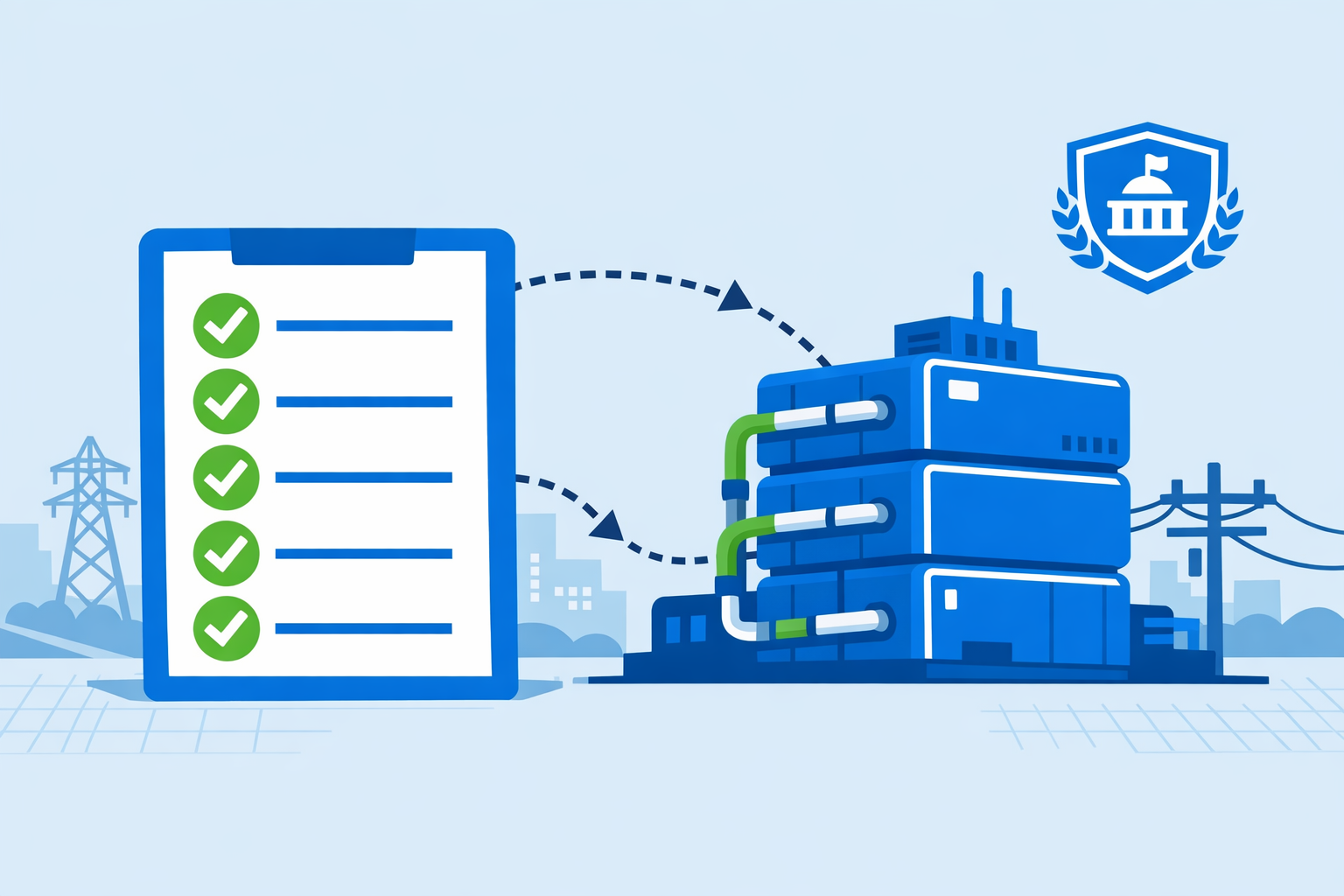
Federal agencies have released a harmonized permitting framework to expedite approvals for modular data center developments. The initiative, coordinated by the White House and the Department of Commerce and announced in March 2026, establishes a standardized milestone review checklist, streamlines energy efficiency reporting, and prioritizes sites classified as critical infrastructure. The framework aligns with standards such as the Open Compute Project and relevant energy codes to minimize duplicative reviews at state and local levels.
Background
The U.S. faces increasing demand for data center capacity, particularly modular deployments, due to growing AI and hyperscale infrastructure needs. Previous executive actions promoted federal land leasing and categorical environmental exclusions to fast-track hyperscale and AI-related data center projects. Under those directives, federal agencies could lease public land and use FAST-41 processes to shorten review timelines, according to an analysis by GWU's regulatory studies program. {{/cite}}
Details
The updated permitting framework introduces a unified review checklist incorporating energy efficiency criteria based on Open Compute Project specifications, supporting more predictable and consistent permitting across jurisdictions. It establishes uniform review milestones, allowing developers to better anticipate approval timelines. Industry participants, including hyperscalers and modular data center manufacturers, report expectations of reduced lead times and improved risk predictability, though they continue to assess adoption at the state level and grid interconnection impacts.
Analysts note these guidelines may shift cost and schedule risks by clarifying approval stages and documentation requirements up front. Utilities and developers are monitoring the framework's interaction with Department of Energy and FERC initiatives to streamline large-load interconnections and distributed energy resource integration. {{/cite}}
Outlook
The effectiveness of the guidelines will depend on state adoption. Industry stakeholders are watching for potential federal funding or incentives supporting compliance upgrades. Grid interconnection reform and cybersecurity requirements remain key areas where the new permitting process must coordinate with existing regulations.