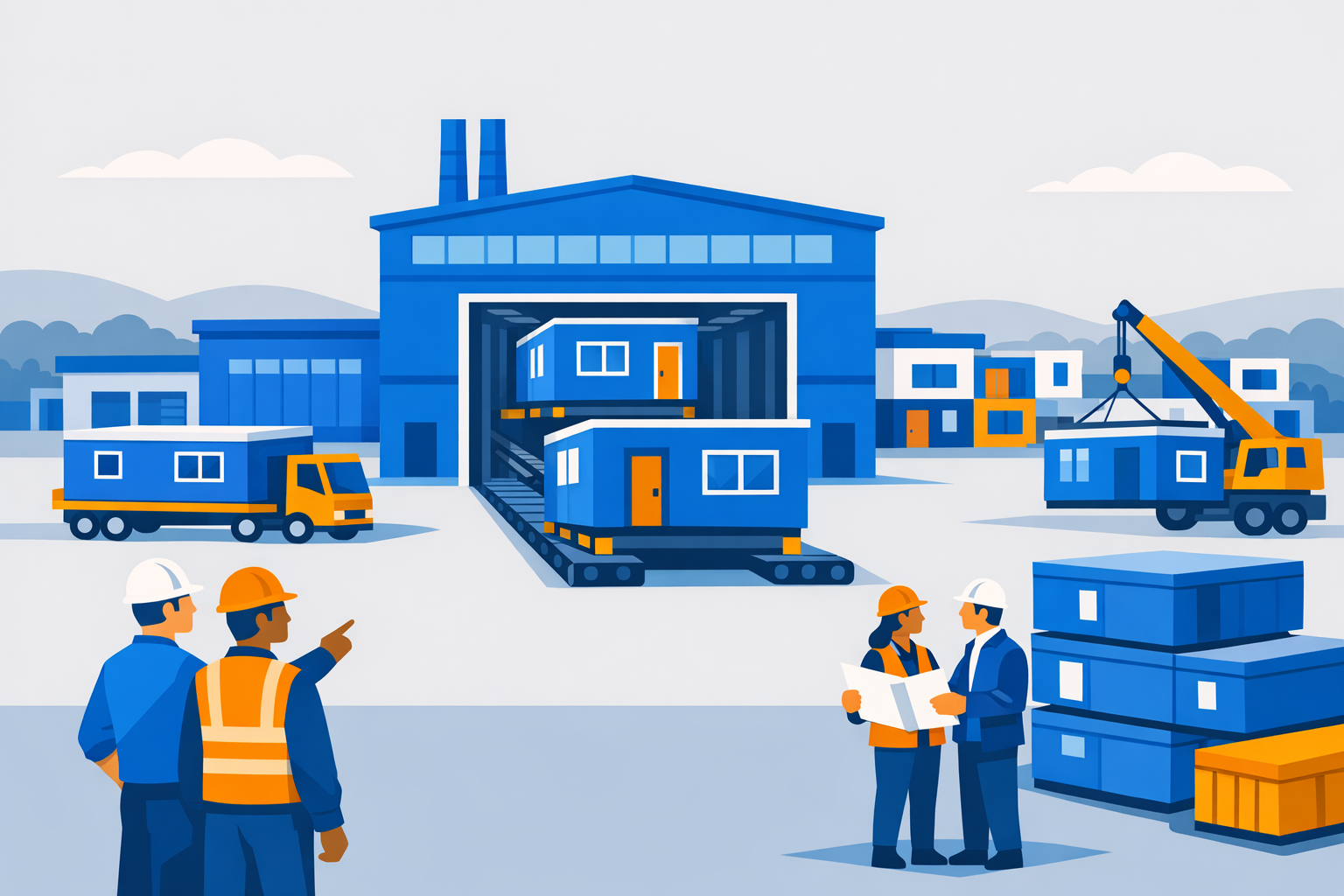
Ulster County, New York has contracted a national modular construction consultancy to design a county-owned factory for building affordable homes - a move signaling a broader shift among mid-sized municipalities toward industrial-scale off-site housing production to address affordability and labor shortfalls.
Background
Ulster County has grappled with a severe housing crisis compounded by the COVID-19 pandemic, prompting its Legislature and Planning Department to pursue innovative solutions.[1] Average rents for one- and two-bedroom apartments in the county rose approximately 40% from 2010 to 2020. In 2018, roughly 12% of homeowners and 30% of renters spent more than half their monthly income on housing.
Conventional construction has done little to relieve the pressure. Stick-built projects are slow by design - crews must pour foundations, frame walls, and install systems sequentially while exposed to weather, with labor shortages and supply chain disruptions compounding delays.
Details
Backed by a $50,000 Empire State Development grant, County Executive Jen Metzger announced the award of a contract to The Mod Squad Team, LLC, to produce a Modular Construction Strategic Plan and a Modular Facility Implementation Plan. The goal: eventually establishing a modular manufacturing facility in Ulster County.
"Ulster County's housing challenges demand both innovation and practical, scalable solutions," Metzger said. "By taking this step toward establishing local modular construction capacity, we are positioning ourselves to build high-quality, energy-efficient housing faster and more affordably, while creating well-paying jobs for our residents."
The Mod Squad Team, which has assisted more than 30 modular factory projects nationwide, will work alongside a newly formed Housing, Offsite Manufacturing, and Employment Council comprising stakeholders from housing, construction, workforce development, and environmental groups.
The plan aims to develop, through a public-private partnership, a modular or panelized construction facility in Ulster County dedicated to producing affordable housing, along with educational and workforce training opportunities.
Kai Lord-Farmer, a planning specialist with the Ulster County Department of Planning and the project's manager, said the initiative addresses "the rising cost of building affordable housing, the need to create meaningful career pathways for our younger residents, and our responsibility to build for the future of our climate."
The economics of factory-built housing are central to the county's rationale. Modular construction compresses timelines by shifting most work into a controlled factory environment, where foundations and modules can be built simultaneously and quality is easier to standardize. Industry studies suggest this approach can cut project build timelines by 30 to 50 percent and reduce costs by 10 to 25 percent. Industry data on per-unit pricing indicates that modular apartment projects typically range from $120,000 to $250,000 per unit, with a per-square-foot spread of approximately $210 to $320.
Permitting and Zoning Challenges
Factory-built housing presents specific regulatory hurdles that mid-sized municipalities must navigate. In most jurisdictions, modular structures must comply with local, state, and national building codes, and costs for zoning, permits, and site clearing vary dramatically by location - with some regions requiring additional scrutiny for modular buildings.
A major contributor to housing scarcity nationwide is zoning: as of 2019, 75% of land in most cities was exclusively zoned for single-family homes, severely limiting the ability to build diverse housing types. Some jurisdictions have begun reforming these barriers. In 2025, the Montana Legislature intensified efforts under legislation known as the "Montana Miracle," implementing rules that permit duplexes and accessory dwelling units by right on all single-family zoned properties. Streamlining permitting processes - including one-stop and parallel-process permitting - is among the tools forward-looking municipalities are adopting.
Financing also remains a consideration. Specialized construction-to-permanent loan packages cover both factory production and on-site completion, and government-backed FHA and VA loans remain accessible, requiring down payments as low as 3.5%.
Outlook
Ulster County's plan targets the development of a modular or panelized construction facility dedicated to producing affordable housing through a public-private partnership. If the strategic plan moves forward, the county could serve as a replicable model for other mid-sized communities facing similar housing gaps. According to Up for Growth's 2025 Housing Underproduction in the U.S. report, the nation faces a shortfall of 3.78 million housing units, and stagnant supply is directly driving increasing unaffordability. For policymakers and developers watching Ulster County, the outcome of this initiative may offer the clearest near-term evidence of whether locally anchored factory production can close that gap at a community scale.