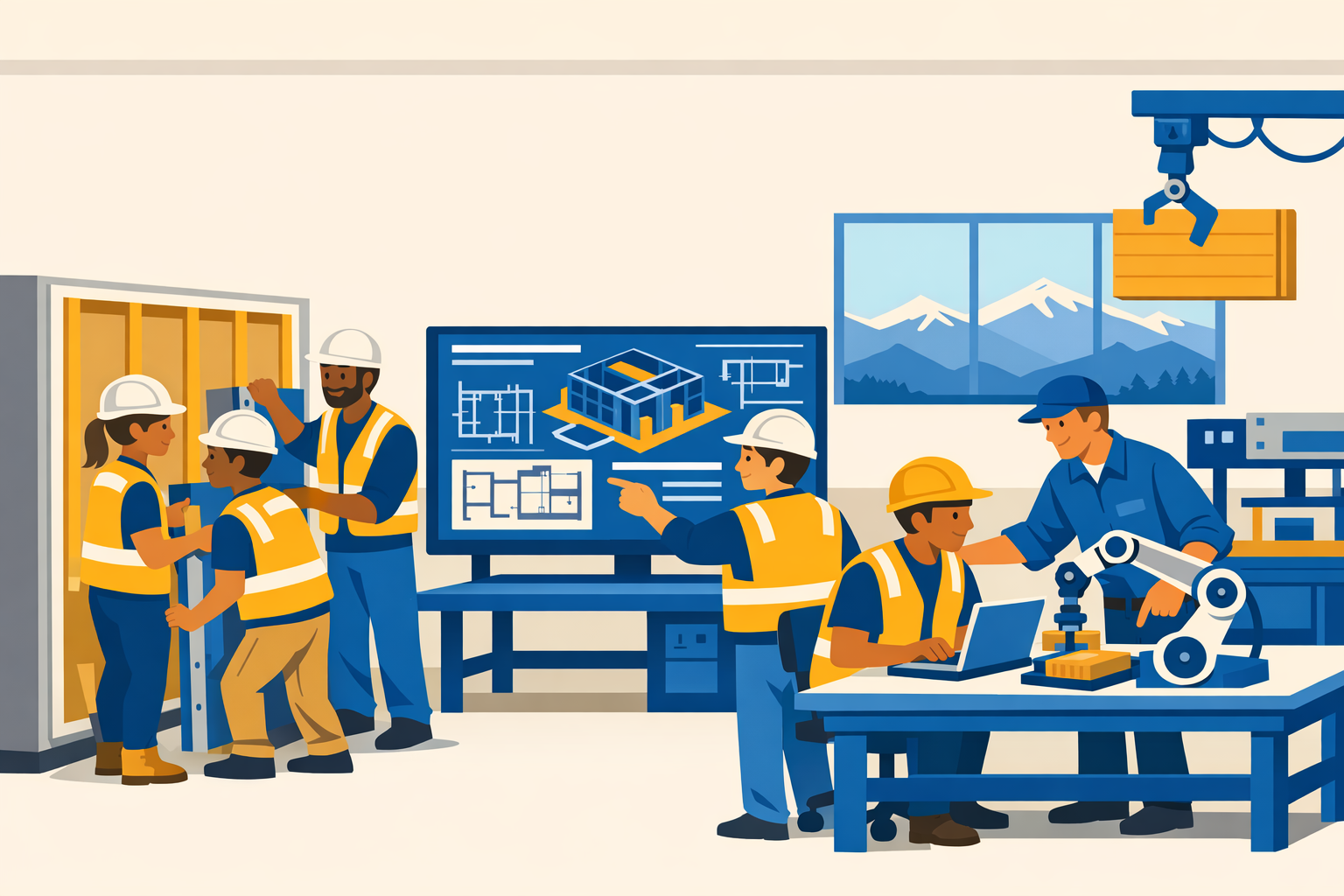
Eastern Wyoming College launched a Construction Technology program this spring, joining a growing number of U.S. community colleges investing in hands-on trades facilities aligned with modern prefabrication and modular construction workflows - a direct response to a deepening skilled labor shortage projected to reach approximately 499,000 unfilled positions in 2026, according to the Associated General Contractors of America.
Background
The construction industry faces a structural workforce crisis that training institutions are now racing to address. According to the National Center for Construction Education and Research (NCCER), approximately 41% of the current construction workforce is projected to retire by 2031, compressing the window for skills transfer. Simultaneously, the adoption of advanced construction methods is accelerating demand for a new type of worker. According to Deloitte's 2026 Engineering & Construction Outlook, firms are increasingly deploying technologies such as Building Information Modeling (BIM), prefabrication, modular construction, and AI-driven scheduling to improve output - tools that reduce labor requirements per unit while creating demand for digitally proficient tradespeople.
The modular construction market is expanding rapidly in parallel. The global modular and prefabricated construction market was valued at approximately $173.5 billion in 2025 and is projected to exceed $300 billion by 2035, according to industry analysis. This growth is placing direct pressure on workforce pipelines, particularly at the community college and apprenticeship level, where entry-level trade credentials are produced.
Program Details
Eastern Wyoming College (EWC) is launching its Construction Technology program in Fall 2025 at its Douglas Campus in Converse County, Wyoming. The college cited a persistent regional housing crisis driven by an influx of workers supporting the oil, gas, and renewable energy industries as a primary factor. According to EWC, a significant factor contributing to the county's housing shortage is the lack of skilled labor available to build long-term and short-term housing solutions. The curriculum includes courses in materials handling, construction equipment operation, architectural and construction planning, engineering graphics, surveying, electrical code, and residential plumbing, with the goal of providing graduates with industry-recognized credentials.
The launch reflects a broader national pattern. The U.S. Department of Labor's Strengthening Community Colleges Training Grants program has committed $65 million through Round 6, targeting short-term training programs that qualify for Workforce Pell Grants, with applications closing May 20, 2026. The program is designed to align community college curricula with employer demand and state workforce systems. According to a 2026 policy survey from the State Higher Education Executive Officers Association (SHEEO), 97% of higher education leaders across 40 states now consider economic and workforce development to be "important" or "very important" - the category's highest-ever ranking.
Demand for BIM-trained workers is particularly acute. BIM adoption now exceeds 60% nationwide, according to industry data, and demand for BIM modelers remains strong in 2026, particularly in prefabricated steel and modular building projects. Research from the European Commission's BUILD UP initiative identifies long-term investment in digital construction training - including BIM, robotics, and off-site fabrication - as essential to sustaining the modular sector's growth.
Outlook
Institutions expanding construction trades programs face mounting pressure to keep pace. The AGC's 2025 Workforce Survey found that 45% of construction firms reported project delays caused by labor shortages, while 52% have engaged with career-building programs at high schools, colleges, or career and technical education institutions to fill the pipeline. As modular methods become more prevalent in public infrastructure and school construction, educators and industry partners are working to align curriculum timelines with regional project pipelines - a challenge that will determine whether accelerated apprenticeship models and stackable credentials can meaningfully close the gap before workforce attrition peaks later this decade.